

Postado por Rodrigo Vieira em 31/Jul/2025 - Sem Comentários
It’s official: on July 4, 2025, U.S. President Donald Trump signed into law the One Big, Beautiful Bill Act, one of the most comprehensive tax reforms in recent decades. Among its highlights are structural and permanent changes to the Low-Income Housing Tax Credit (LIHTC) program—the main federal incentive for affordable housing in the country.
This enactment marks a historic milestone for the affordable housing sector, with the potential to significantly expand the scale and predictability of housing projects targeting low-income populations. For impact-driven investors and long-term-focused managers, such as CIX Capital with the CIX ESG Affordable Housing Bond II, the new regulations indicate an increasingly favorable environment for the growth of this strategy.
The LIHTC is the U.S. government’s primary tool to encourage the private sector to build and preserve affordable housing for low-income families.
Created in 1986 as part of the Tax Reform Act, the LIHTC emerged during a shift in U.S. housing policy, following decades of declining direct federal subsidies.
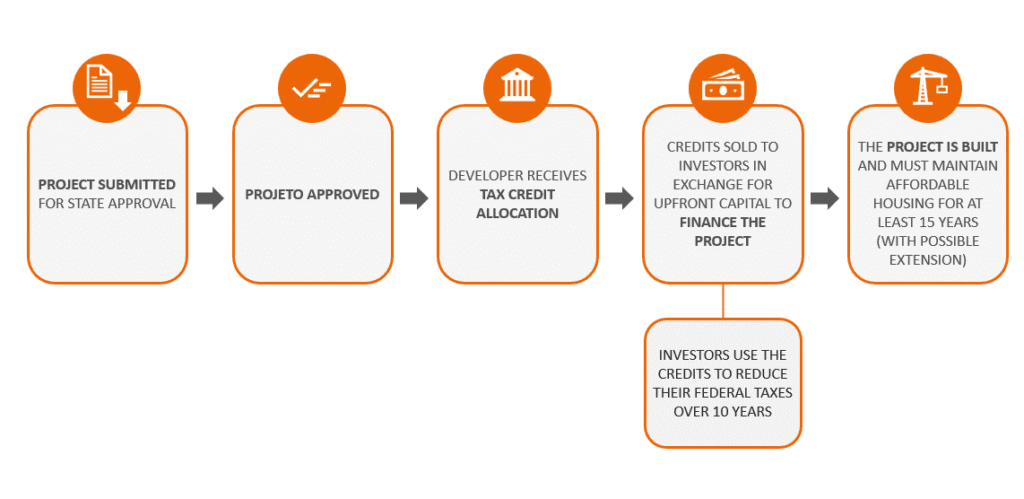
In the 1940s and 1950s, programs like FHA 608 supported housing construction for veterans. In the 1960s, initiatives like HUD 236 provided subsidies and low-interest loans to private developers. However, with the pullback of direct federal housing investment in the 1980s, a new model was needed—one that mobilized private capital. The LIHTC filled this role by offering tax credits to investors who financed affordable housing developments.
Through these incentives, the program has attracted substantial private investment, resulting in the development and preservation of millions of affordable units nationwide. To date, LIHTC has financed over 3.7 million homes and accounts for roughly 90% of all new affordable rental housing production in the U.S.
The program is federally administered by the Internal Revenue Service (IRS) but distributed at the state level through annual allocations to Housing Finance Agencies (HFAs), which select qualifying projects via competitive processes.
The LIHTC currently operates through two primary credit types:
● 9% Credit: Targets developments without tax-exempt bond financing; covers up to 70% of qualified costs.
● 4% Credit: Requires that at least 50% of project costs be financed by tax-exempt Private Activity Bonds (PABs). This is known as the “50% test.”
Each U.S. state has an annual cap on the amount of PABs it can issue, based on population. High-demand states like California often hit this cap quickly, due to competition from infrastructure, education, health, and housing projects.
As a result, viable and socially impactful developments were often unable to secure sufficient bond financing to meet the 50% threshold and were thus disqualified from receiving the 4% LIHTC.
In addition, smaller-scale projects or those with blended funding (e.g., municipal or philanthropic) frequently did not require 50% bond financing—but still lost eligibility, despite being economically viable.
This structural constraint prevented many states and municipalities from accelerating affordable housing pipelines, even with land and projects ready to go.
4% Credit Financing Mechanism
Eligibility Rules for Tenants
To qualify for LIHTC-supported units, developments must meet one of two criteria:
● At least 40% of units must be rented to families earning ≤ 60% of Area Median Income (AMI), or
● At least 20% of units must go to families earning ≤ 50% of AMI.
The annual LIHTC allocation per state is limited, which restricts the number of projects that can be financed. Previous temporary increases, like the 12.5% expansion from 2018 to 2021, have expired—leaving uncertainty for developers and investors.
To expand the effectiveness and scale of the LIHTC, the U.S. Senate introduced the One Big, Beautiful Bill Act in June 2025 as part of its tax reform package.
The name is a nod to a phrase frequently used by President Trump to describe bold, politically charged legislation. The bill reflects a bipartisan effort to address the nation’s housing affordability crisis through long-term solutions.
Signed into law on July 4, 2025, after a narrow 51–50 Senate vote (with Vice President J.D. Vance casting the tie-breaking vote), the act introduces the following key changes:
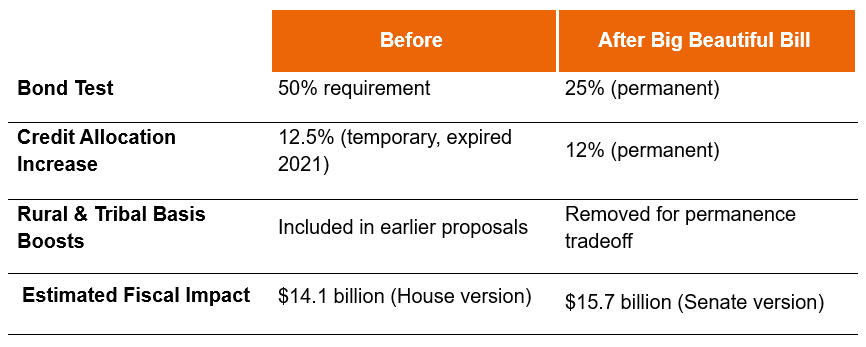
According to consulting firm Novogradac, these changes are expected to enable the development of over 1 million additional affordable units over the next decade.
The reforms provide long-term predictability, remove technical bottlenecks for socially necessary projects, and unlock pipelines in states previously constrained by the 50% rule.
By reducing the bond requirement to 25%, states can finance twice as many developments with the same bond volume. This change especially benefits urban markets with high land and construction costs, where demand for affordable housing is acute.
For institutional investors—particularly those with ESG or impact mandates—this creates an environment that strengthens the economic and social case for investing in affordable housing.
The enactment of the Big Beautiful Bill represents the most significant structural advance in the LIHTC program in nearly 20 years. Set to take effect on January 1, 2026, the reforms are expected to drive tangible, long-term expansion of the affordable housing sector, stimulate economic activity, and provide a powerful response to the housing affordability crisis in the U.S.
As highlighted by Affordable Housing Finance magazine in its July 2025 issue, these updates mark: “The biggest expansion of the program in decades.”
In short, the affordable housing sector is undergoing a historic shift—and investment vehicles well-positioned to capture this moment, like the CIX ESG Affordable Housing Bond II, have a rare opportunity to deliver measurable social impact and attractive financial returns at scale.
● Novogradac. (2025). Final Reconciliation Bill Permanently Expands LIHTC, NMTC and OZ Incentive. https://www.novoco.com/notes-from-novogradac/final-reconciliation-bill-permanently-expands-lihtc-nmtc-and-oz-incentive-but-does-not-include-htc-provisions
● Nelson Mullins. (2025). Senate Passes Reconciliation Bill with Historic Housing Credit Investment. https://www.nelsonmullins.com/insights/alerts/nelson-mullins-affordable-housing-news/all/senate-passes-reconciliation-bill-with-historic-housing-credit-investment-what-is-next
● Housing Finance Online. (2025). LIHTC Provisions Become Permanent in Senate Reconciliation Bill. https://www.housingonline.com/2025/06/18/lihtc-provisions-become-permanent-in-senate-reconciliation-bill/
● Tax Credit Coalition. (2025). Senate Provides Permanent Housing Credit Expansion, Lower Bond Test in Reconciliation Bill. https://www.taxcreditcoalition.org/senate-provides-permanent-housing-credit-expansion-lower-bond-test-in-reconciliation-bill/
● Politico. (2025). Vance’s Potential 2028 Democratic Rivals Want Him to Be the Face of the Megabill. https://www.politico.com/news/2025/07/01/vance-one-big-beautiful-bill-2028-00436041
● CRE Daily. (2025). LIHTC Reform Gains Momentum with Proposed Federal Bill. https://www.credaily.com/briefs/lihtc-reform-gains-momentum-with-proposed-federal-bill/
● McGuireWoods. (2025). Congress Passes One Big Beautiful Bill Act With Impacts on Housing. https://www.mcguirewoods.com/client-resources/alerts/2025/7/congress-passes-one-big-beautiful-bill-act-with-impacts-on-housing/
Postado por Rodrigo Vieira em 30/Jul/2025 - Sem Comentários
O Estado de S. Paulo, in a report by journalist Breno Damascena, announced that CIX Capital has launched the CIX Retrofit FII RL, its first real estate investment fund dedicated to the city of Rio de Janeiro. The project involves converting two commercial buildings in the city center into residential units, with the most prominent being the iconic João Úrsulo Building, designed by renowned architect Lúcio Costa, creator of Brasília’s master plan. The initiative begins with an initial investment of R$ 50 million, with an expected Gross Development Value (GDV) of over R$ 100 million.
With approximately 10,000 m² of retrofit potential, the plan aims to transform currently underutilized office spaces—such as João Úrsulo, which has an occupancy rate of only 9%—into compact apartments ranging from 25 m² to 40 m². The strategy leverages incentives from the Reviver Centro Program, which offers subsidies per square meter, tax benefits, and increased building potential for urban renewal projects. Beyond the urban impact, the transformation is also expected to boost commerce and safety in the area.
According to CEO Carlos Balthazar, the retrofit presents an opportunity to align financial returns with positive urban impact. He notes that properties refurbished under the Reviver Centro Program have seen significant appreciation and believes that CIX’s project will serve as a catalyst to attract new residents and revitalize Rio’s downtown core. With completion expected by 2027 and sales starting in 2026, the operation joins the firm’s robust portfolio, which includes R$ 2.8 billion in assets under management and over 100 transactions conducted across Brazil and the United States.
Access full article on: Estadão
Postado por Rodrigo Vieira em 15/May/2025 - Sem Comentários
The industrial real estate sector has proven to be one of the most resilient segments within the commercial property market, navigating economic turbulence and shifts in consumer behavior with remarkable adaptability.
The past five years have been marked by unprecedented challenges — from a global pandemic to supply chain disruptions and inflationary pressures. Yet, the industrial sector has emerged as a standout performer. The surge in e-commerce, accelerated by pandemic-era consumer behavior shifts, has driven heightened demand for warehouses, distribution centers, and last-mile facilities — the latter referring to properties situated near urban centers. This demand has been a key engine of growth, pushing vacancy rates to historically low levels and fueling strong rent increases.
Over this period, industrial properties have benefited from a structural transformation in how goods are delivered to consumers. This is not a temporary trend but a fundamental evolution, positioning industrial real estate as an essential infrastructure asset.

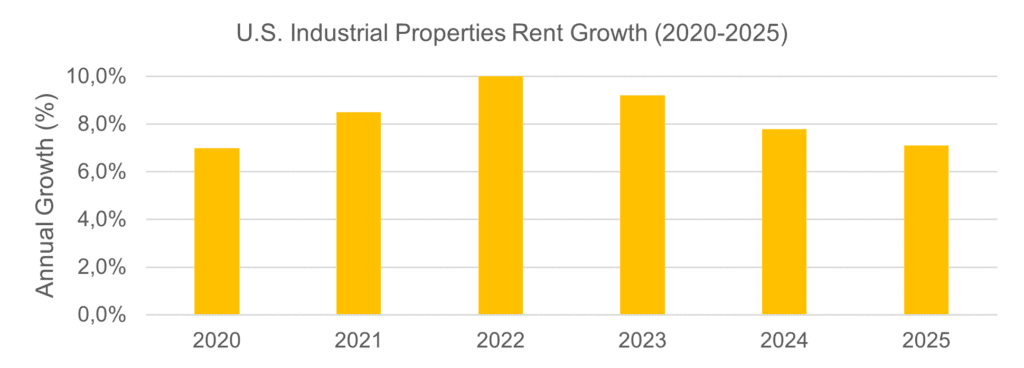
Since 2020, industrial vacancy rates have hovered around 5% — a notable contrast to other commercial real estate categories such as office and retail, which have faced elevated vacancy levels due to remote work trends and retail closures. Rent growth has also been impressive, with annual increases averaging 7–10% in major markets, driven by limited supply and sustained demand.
Absorption rates — the pace at which available space is leased — have remained positive, even amid increased construction activity aimed at meeting rising demand.
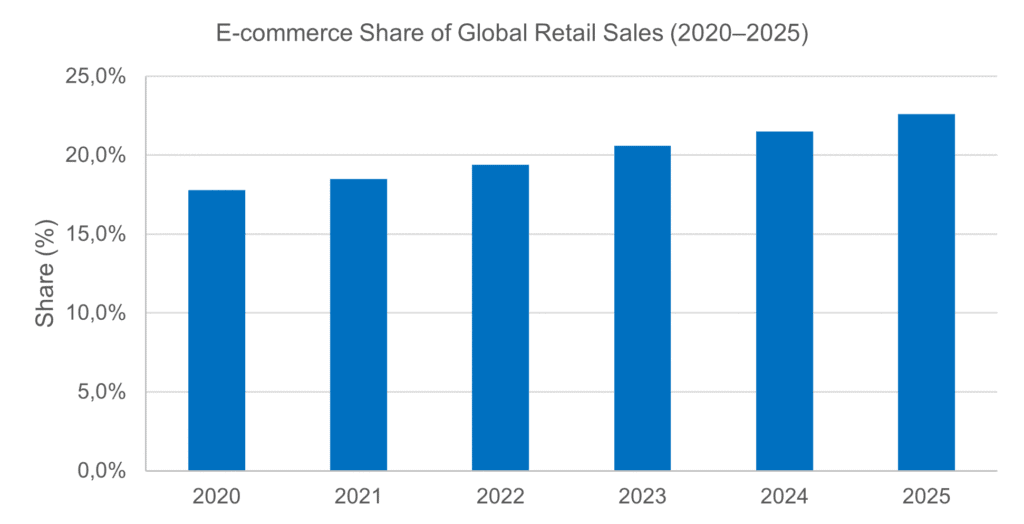
Looking ahead, Marcus & Millichap projects a cautiously optimistic outlook for the next five years. The industrial sector appears well-positioned to maintain its upward trajectory, supported by several favorable drivers. Chief among them is the continued expansion of e-commerce, which shows no signs of slowing. Projections suggest that online sales could account for 30% of total retail sales by 2030, up from around 22% in 2025. This growth will continue to fuel demand for logistics facilities, particularly in secondary and tertiary markets where land is more accessible and development opportunities remain abundant.
Technology is also reshaping the sector. Automation, robotics, and artificial intelligence are transforming warehouse operations, increasing demand for modern facilities with high ceilings and advanced infrastructure. Investors are increasingly prioritizing properties capable of accommodating these innovations, indicating a shift toward quality over quantity in new developments.
However, some headwinds remain. Elevated interest rates — while beginning to stabilize in early 2025 — may still temper investment activity if borrowing costs stay high. Additionally, geopolitical tensions and potential changes in trade policy could disrupt global supply chains, impacting the flow of goods and, by extension, industrial demand in certain geographies.
Markets such as Dallas–Fort Worth and Atlanta remain powerhouses due to their strategic locations and robust transportation networks, despite recent surges in deliveries and a slight uptick in vacancy. Meanwhile, emerging markets like Charlotte, Nashville, and Central Ohio are gaining momentum as businesses seek cost-effective alternatives to coastal hubs. These secondary markets offer lower barriers to entry for investors and ample room for expansion.
Sustainability is becoming a cornerstone of new developments. Solar panels, energy-efficient lighting, and water recycling systems are increasingly standard features. Experts predict that by 2030, sustainability will be a key differentiator, influencing tenant preferences and property valuations alike.
The industrial real estate sector’s ability to weather uncertainty over the past five years underscores its enduring appeal. The intersection of e-commerce growth, technological innovation, and strategic development has solidified the sector’s standing as a top-tier asset class.
CommercialEdge. (2025). National Industrial Report (February 2025). Available at: https://www.commercialedge.com/blog/national-industrial-report/
Cushman & Wakefield. (2025). US Industrial MarketBeat Q1 2025. Available at: https://www.cushmanwakefield.com/en/united-states/insights/us-marketbeats/us-industrial-marketbeat
Statista. (2025). E-commerce share of retail sales worldwide. Available at: https://www.statista.com/statistics/534123/e-commerce-share-of-retail-sales-worldwide/
Postado por Rodrigo Vieira em 29/Apr/2025 - Sem Comentários
For sophisticated investors seeking a combination of resilience and consistent returns, Medical Office Buildings (MOBs) – facilities designed to house physicians’ offices and outpatient healthcare services – stand out as one of the most promising opportunities in the U.S. real estate market today.

A growing need for medical services underpins the strength of the MOB sector. Population aging is a powerful catalyst: according to the U.S. Census Bureau, the number of Americans aged 65 and older is projected to reach 83 million by 2050. This demographic segment requires more outpatient care, which is increasingly delivered in MOBs. Chronic conditions such as diabetes and hypertension further amplify this demand. Data from CBRE highlights that, in 2024, MOBs reached an occupancy rate of 92%, with average rents growing at 3.8% per year – compelling figures that reflect the sector’s strong fundamentals.
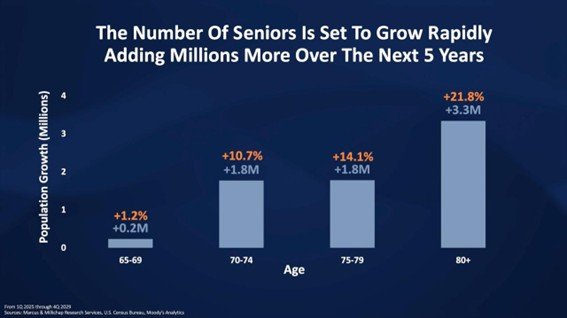
Compared to other commercial real estate segments, MOBs have proven remarkably stable during economic downturns. Leases tend to be long-term – typically between 7 to 10 years, according to JLL – and tenants are often high-quality healthcare providers or specialized physicians. This results in reliable cash flows, making MOBs a favored choice for institutional investors. In fact, transaction volume in the sector reached $15 billion in 2024, as reported by Real Capital Analytics, indicating strong investor confidence.
The ongoing shift toward outpatient care – driven by technological advances and patient preferences – continues to raise the strategic value of MOBs. Properties that are well-located near hospitals or in densely populated areas are particularly attractive, offering yields between 5.5% and 7% in primary markets, according to Marcus & Millichap Research.
This combination of long-term healthcare trends and geographic positioning enhances the appreciation potential of these assets.
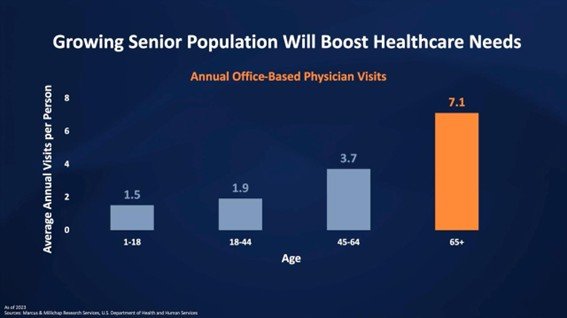
Fast-paced economic cycles require a forward-thinking investment approach. In MOBs, this means focusing on the enduring demand for healthcare rather than short-term economic fluctuations like interest rates or inflation. With new MOB construction expected to grow 4% annually through 2028 (CBRE), the sector presents a unique opportunity for investors seeking recession-resistant assets.
To maximize returns in MOB investments, consider the following principles:
● Prime Location: Target regions with high concentrations of seniors or robust hospital infrastructure.
● Tenant Quality: Favor leases with well-established healthcare networks to ensure income stability.
● Specialized Partnerships: Work with advisors such as Marcus & Millichap to identify high-potential assets.
At CIX Capital, we have been investing in MOBs across the U.S. since 2019 through the CIX Flagler Healthcare Fund, a joint venture with the former Flagler Healthcare – now Sphere Investments – a health-focused real estate firm that leverages Big Data and proprietary algorithms to evaluate opportunities.
The fund’s portfolio includes 11 properties in states such as Florida, Texas, Nevada, Oklahoma, and California, with a focus on acquiring leased outpatient clinics in major U.S. metropolitan areas. Target properties are anchored by long-term leases with healthcare tenants, ideally in specialties such as Neurology, Orthopedics, Oncology, and Gastroenterology.
CBRE. (2024). 2025 U.S. Healthcare Real Estate Outlook. Accessible at: https://www.cbre.com/insights/reports/2025-us-healthcare-real-estate-outlook.
Jones Lang LaSalle. (2025, March). Healthcare’s outpatient revolution: Double-digit growth on the horizon. Accessible at: https://www.jll.com/en-us/newsroom/healthcare-outpatient-volumes-to-grow-by-double-digits
Marcus & Millichap. (2024). High-Speed Cycles Require Long-Term Thinking [Video]. Accessible at: https://www.marcusmillichap.com/
Real Capital Analytics. (2024). Commercial real estate transaction data. Accessible at: https://www.rcanalytics.com/
U.S. Census Bureau. (2014). An aging nation: The older population in the United States (Report No. P25-1140). Accessible at: https://www.census.gov/library/publications/2014/demo/p25-1140.html
Postado por Rodrigo Vieira em 18/Mar/2025 - Sem Comentários
In 2020 and 2021, the Covid-19 pandemic led countries to implement isolation policies and to restrict activities, forcing the closure of in-person services. Companies adopted remote work models to stay operational, with employees working directly from their homes.
Today, that reality seems like a distant past, as more and more companies return to in-person office spaces. In the US, President Donald Trump revoked remote work for federal government employees, and companies—especially in the technology sector—are increasingly reinstating the requirement for full-time, in-person work.
The American office market has been showing signs of recovery in what appears to be a solidified trend. In this article, CIX Capital analyzes the key factors driving this comeback.
The isolation policies and the widespread shift to remote work directly impacted the dynamics of the office sector in the United States, starting with occupancy rates:

Source: CoStar
At the beginning of 2020, occupancy stood at 91%. However, following the pandemic’s impact in the first quarter, a sharp decline began, continuing throughout the period and closing the fourth quarter of 2024 at 86%, a 5% drop.
A segment that has long been the cornerstone of commercial real estate portfolios, offices also experienced a significant decline in sales volume compared to pre-pandemic levels.
Regarding in-person work, sentiment among major corporate leaders is mixed: some are adopting a hybrid model to avoid the high costs of office rents and general property maintenance expenses, while others believe a full return to in-person work is the path forward.
Source: CoStar
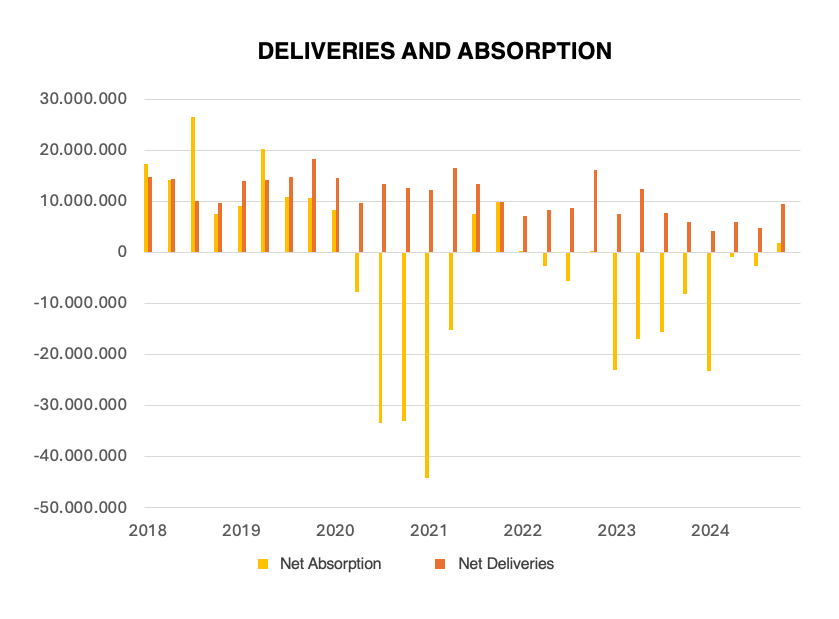
The close of 2024 marked a significant milestone in the recovery of the US office market. With leasing activity gaining momentum throughout the year, the fourth quarter recorded the first positive net absorption since Q4 2021—a period when the market saw a temporary boost likely driven by partial returns to the office, incentives, contract renegotiations, and workspace reconfigurations by companies.
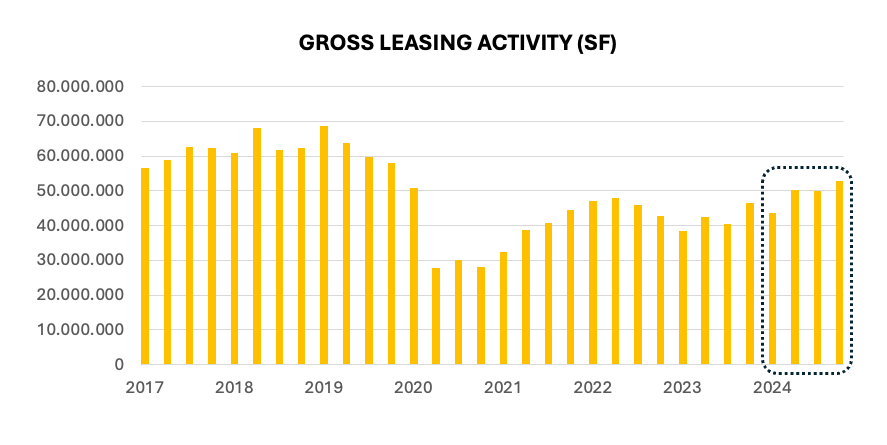
Gross Leasing Activity (GLA, in square feet) reached post-pandemic highs for three consecutive quarters, with the fourth-quarter volume representing more than 92% of pre-pandemic averages.
Source: JLL
With many companies requiring a more regular in-office presence in recent years, the number of requests for reductions in leased space has dropped significantly.
Landlords, in turn, are seeing a moderation in requests for concessions and discounts, which have surged in recent years. They are expected to experience greater relief in the medium term, as the development pipeline has shrunk drastically compared to 2019 levels, and underperforming properties are being quickly removed from the market for conversions and repositioning projects—such as the so-called retrofits.
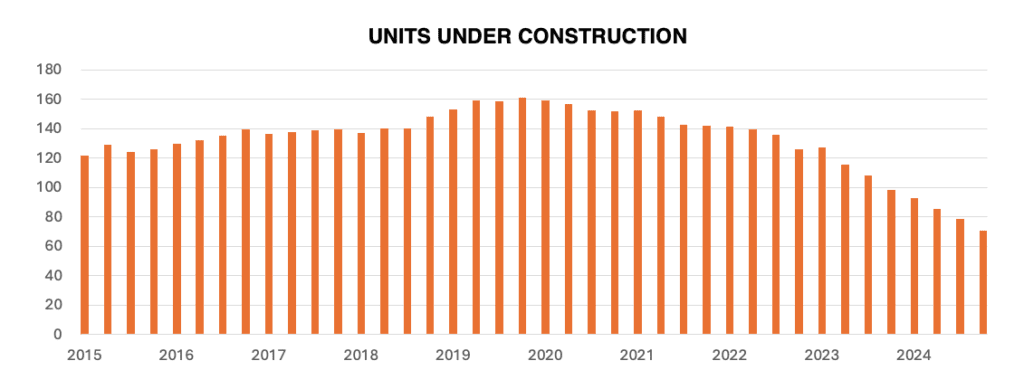
Source: JLL
The labor market is less robust compared to recent years but remains resilient. For instance, office-using industries created 763,000 new jobs in 2023 and 615,000 new jobs throughout 2024.
Payrolls in key sectors grew by just 0.5% over the past year, but strong growth of over 4% in outpatient healthcare services boosted demand within the medical office sub-sector.
Tenants remain active but cautious: More lease agreements were signed in 2024 than was typical in the 2010s; however, these deals were 15 to 20% smaller than pre-pandemic averages. Smaller tenants continue upgrading their spaces, while larger occupiers tend to stay put—helped by slower headcount growth and limited by the increasing scarcity of large spaces in premium buildings.
Market Context
Demand for office space has begun to show signs of recovery, with leasing volume in the US growing 11.5% year-over-year in the third quarter of 2024, according to CBRE Group. However, vacancy rates remain high, reaching 19% nationwide and up to 37% in markets like San Francisco.
Refinancing challenges are also significant, with $300 billion in office-related debt maturing in the coming year.
Additionally, 2024 saw a resurgence in transactions, with sales volumes increasing by 17% compared to 2023, according to MSCI Inc. As reported by Bloomberg, notable deals—from sales of stakes in trophy properties to distressed asset acquisitions—reflect evolving owner strategies to navigate this challenging environment:
Key Transactions:
● 980 Madison Ave., New York — $560 million
RFR Holding sold the Manhattan building for $560 million to Bloomberg Philanthropies.
● One Vanderbilt, New York — 11% Stake Valued at $4.7 Billion
SL Green Realty sold an 11% stake in the prestigious Manhattan tower to Japan’s Mori Building Co.
● Pacific Corporate Towers, California — Debt Converted to Equity
Beacon Capital Partners and 3Edgewood acquired a majority stake in the property’s $485 million senior loan at a 60% discount.
● 701 Brickell, Miami — $443 million
Elliott Investment Management purchased the office tower from Nuveen Real Estate, marking the second-largest office sale in Florida’s history.
● 5 Times Square, New York — Debt Converted to Equity
Apollo Global Management converted mezzanine debt into equity ownership in the renovated office building.
The US office market is set for a decisive shift in 2025, with stabilization paving the way for a new cycle. As office attendance reaches a steady level and the economy heads toward a soft landing, occupiers are expected to plan their portfolios with greater confidence.
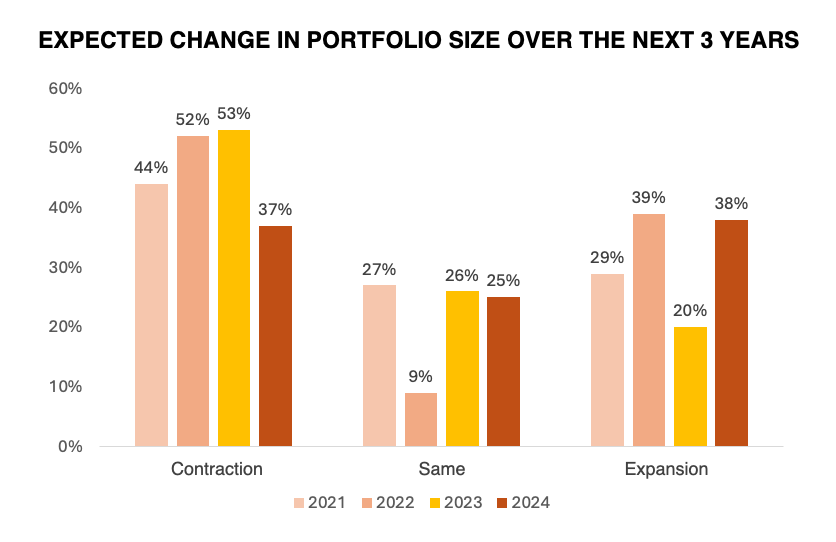
Source: CBRE
More than 38% of respondents in CBRE’s 2024 Occupier Sentiment Survey plan to expand their portfolio needs over the next two years, while 25% expect no change. This is expected to support positive office space absorption in 2025.
Based on the chart, we observe a shift in occupiers’ intentions: moving from expectations of space contraction to maintaining—and even expanding—leased areas, which favors the absorption of office space.
The “rightsizing” process—adjusting space—should continue in 2025 due to pre-pandemic inefficiencies and the reduction of space driven by hybrid work models. However, much of this adjustment has already occurred over the past four years.
Positive changes, combined with a significant slowdown in new supply and falling interest rates, create the most optimistic scenario the market has seen in years. However, some challenges remain, such as slower-than-expected growth in office-using jobs, a large amount of sublease space available, and high vacancy rates in less desirable properties.
The increase in demand for office space is expected to result in a 5% rise in leasing volume in 2025. Smaller occupiers seeking between 10,000 and 20,000 square feet (1,000 to 2,000 m²) will account for more than half of total leasing volume.
Amid this office market recovery, one standout is the strong growth of over 4% in outpatient healthcare services, which continues to drive demand for the medical office building (MOB) sub-sector.
CIX Capital has been investing in MOBs across the US since 2019 through the CIX Flagler Healthcare Fund, a fund with a portfolio of 11 assets located in states such as Florida, Texas, Nevada, Oklahoma, and California.
Postado por Rodrigo Vieira em 20/Feb/2025 - Sem Comentários
Fulfilling his campaign promises, Donald Trump recently announced new tariffs on imported goods from various countries. These tariffs have become the center of economic debate and are already showing signs of impacting the financial markets. The so-called “tariff surge” by the president has raised concerns among economists about the possibility of a global trade war.
The first announced tariffs, which include a 25% increase on imports from Canada and Mexico and an additional 10% on Chinese goods, prompted swift responses from the Canadian and Mexican governments, leading to negotiations. Both North American neighbors managed to delay the application of these tariffs by 30 days, but Trump remains firm in his tariff policy, and the outcomes are uncertain.
On February 10, the U.S. president signed an order imposing a 25% tariff on steel and aluminum imports and revoked tax exemptions and quotas for major suppliers, including Canada, Mexico, and Brazil, effective March 12. Brazil is currently considering possible responses.
More recently, on February 13, Trump announced a reciprocal tariff plan aimed at “correcting imbalances in international trade and ensuring fairness,” intending to boost U.S. competitiveness, foster industry, and benefit American workers, according to a Fact Sheet published by the White House. The memorandum did not specify exact tariffs but highlighted the disparity between the 2.5% tariff on Brazilian ethanol imports to the U.S. and the 18% tariff on American ethanol imported by Brazil.
Trump claims that the U.S. has sufficient resources to meet domestic demand without relying on imports, while experts warn that the country lacks the necessary industrial capacity. Amid these uncertainties, tariffs used as a negotiation tool to address issues such as immigration, as claimed by the president, may be lifted in the short term. However, long-term tariffs could lead to more significant consequences.
Since this issue is evolving, policies and their impacts may change rapidly. CIX Capital analyzes potential developments, particularly regarding the real estate market based on currently available information.
According to experts, the new tariffs could accelerate inflation and slow economic growth in the U.S., prompting the Federal Reserve (Fed) to closely monitor the economic impact, especially regarding inflation control. Despite Trump’s claims that foreign countries will bear the costs, analyses suggest that these expenses will inevitably be passed on to consumers. Tariffs impact supply chains at multiple levels, leading Americans to face higher prices on durable and non-durable goods, including groceries, cars, electronics, gasoline, and real estate.
Another aspect to monitor is the capital markets’ response. So far, municipal bonds (munis) have shown little volatility due to the tariffs, but analysts warn that states more exposed to international trade, such as Texas, California, Michigan, and Illinois, may face specific challenges.
Interest Rates and Financing
For the U.S. real estate market, Trump’s tariff measures have a dual effect. In the short term, mortgage rates remain stable, with the 30-year fixed rate averaging around 6.95%. However, the potential for significant price increases in various consumer goods could prompt the Federal Reserve to adopt a more aggressive stance against inflation, leading to higher interest rates.
The housing market has already been grappling with high-interest rates and reduced affordability, contributing to the current housing crisis.

Source: Freddie Mac
Effects on Residential Construction
The rising import costs are expected to impact the construction sector, which is already struggling with high material costs and a shortage of skilled labor. Increased input prices will likely raise the cost of new housing, worsening the housing crisis.
A February 2 CNN Business article highlights the scale of these implications: the U.S. currently imports about 30% of its “softwood” lumber from Canada, with 70% of the lumber used in residential construction in 2023 coming from the same source. Additionally, 71% of lime and gypsum—key materials for drywall—are imported from Mexico. These materials are widely used in residential construction frameworks, roofs, and walling.
The report also notes that, according to the National Association of Home Builders (NAHB), rising material prices could increase construction costs by $3 billion to $4 billion. Historically, tariffs on lumber have negatively affected consumers more than they have benefited domestic producers. For example, the 2006 agreement between the U.S. and Canada reduced lumber imports, benefiting American producers by $1.6 billion but costing consumers $2.3 billion due to higher prices.
Beyond lumber and gypsum, the 25% tariff on steel and aluminum imports is expected to increase prices for items like garage doors, air conditioning units, and dumpsters.
While the president argues that these measures will stimulate domestic production, the reality is more complex. The lumber industry, for instance, faces challenges such as bureaucratic hurdles to opening new sawmills, environmental restrictions on logging, infrastructure needs for transportation, and a shortage of skilled labor.
Despite these challenges, there is some optimism that the government might ease regulations to support new housing production, potentially mitigating some of the tariffs’ impact on the construction market.
Property Prices and New Multifamily Projects
The multifamily housing market—one of the most resilient sectors in U.S. real estate—continues to grow but may feel the indirect effects of the tariffs over time. Increased production costs, combined with potential inflation, could reduce developers’ profit margins and affect project feasibility.
The duration of these tariffs and market reactions will be critical. If tariffs persist long-term, rising prices could lead to higher financing costs, making housing even less accessible.
As the effects of these tariffs unfold, caution and adaptability are crucial. CIX Capital continues to monitor developments in the U.S. real estate market, focusing on factors such as:
• The Federal Reserve’s response to inflationary pressures and its interest rate policies;
• The impact of construction material prices on new developments;
• The response of states most exposed to international trade.
We will keep a close watch on these developments and their implications for the real estate sector.
Since 2022, CIX Capital has been focusing on addressing the U.S. housing deficit by investing in the pre-development phase of social housing projects in California through the CIX ESG Affordable Housing Bond. Targeting the “workforce” housing segment, these projects benefit from the U.S. government’s Low-Income Housing Tax Credit (LIHTC) program, which grants tax credits to developers in exchange for reserving a portion of units at restricted rents for low-income families.
The program has financed 3.85 million housing units in the U.S., benefiting 9 million families. The projects comply with Title 24 Building Energy Efficiency Standards and/or earn additional certification through Greenpoint or LEED (Leadership in Energy and Environmental Design), which are benchmarks for sustainable construction.
To date, we have invested in 34 properties across 25 different cities in California.
References
ESTADÃO. Trump tariffs likely to raise prices for U.S. consumers. O Estado de S. Paulo, Feb 14, 2025. Available at: https://www.estadao.com.br/economia/tarifas-trump-precos-consumidores-americanos/. Accessed: Feb 14, 2025. CNN. Canada tariffs on wood and lumber could impact housing market.
CNN Business, Feb 2, 2025. Available at: https://edition.cnn.com/2025/02/02/economy/canada-tariffs-wood-lumber-housing/index.html. Accessed: Feb 14, 2025. G1. Trump talks about reciprocal tariffs on countries taxing U.S. goods. G1 Economia, Feb 13, 2025. Available at: https://g1.globo.com/economia/noticia/2025/02/13/trump-tarifas-reciprocas-aos-paises-que-cobram-taxas-dos-eua.ghtml. Accessed: Feb 14, 2025.
HOUSINGWIRE. Trump tariffs and price hikes: What homebuilders need to know. HousingWire, 2025. Available at: https://www.housingwire.com/articles/trump-tariffs-price-hikes-homebuilders/. Accessed: Feb 14, 2025.
MORNINGSTAR. Buying a house amid the trade war? Here’s what to expect from mortgage rates. Morningstar, Feb 3, 2025. Available at: https://www.morningstar.com/news/marketwatch/20250203474/buying-a-house-amid-the-trade-war-heres-what-to-expect-from-mortgage-rates. Accessed: Feb 14, 2025.
BOND BUYER. Tariff plans have little impact on muni market. Bond Buyer, 2025. Available at: https://www.bondbuyer.com/news/tariff-plans-have-little-impact-on-muni-market. Accessed: Feb 14, 2025.
WHITE HOUSE. Fact Sheet: President Donald J. Trump announces fair and reciprocal plan on trade. The White House, Feb 2025. Available at: https://www.whitehouse.gov/fact-sheets/2025/02/fact-sheet-president-donald-j-trump-announces-fair-and-reciprocal-plan-on-trade/. Accessed: Feb 14, 2025.
FREDDIE MAC. U.S. Economy Remains Resilient with Strong Q3 Growth. Freddie Mac, Nov 26, 2024. Available at: https://www.freddiemac.com/research/forecast/20241126-us-economy-remains-resilient-with-strong-q3-growth. Accessed: Feb 19, 2025. BLOOMBERG. NMCMFR30 Index. Bloomberg. Available at: https://www.bloomberg.com. Accessed: Feb 19, 2025.
Postado por Rodrigo Vieira em 10/Feb/2025 - Sem Comentários
The multifamily market in the United States is known for its adaptability and strong demand. This type of property consists of buildings or residential complexes intended exclusively for rental, catering to those who prefer renting over homeownership.
In 2024, the segment remained strong and demonstrated significant resilience, with a record number of new constructions since the 1980s and high demand, almost as intense as in the years immediately following the pandemic. Despite this, rental prices saw only a slight increase of just 0.3%, while occupancy levels remained stable, with approximately 94.4% of units rented. Here in Brazil, this market segment is still in its early stages but is gaining traction as more people and investors recognize its potential. This presents an opportunity to learn from successful models abroad and adapt them to our local reality.
Some examples of companies operating under this model in Brazil include Greystar, which runs the Ayra development, the housing-as-a-service startup Yuca, and Share Student Living— an investment of one of our funds — among others.
For 2025, rental prices are expected to show positive growth, while vacancy rates will slightly increase overall, with some markets being exceptions to this trend. Property values remain under pressure due to persistently high and volatile interest rates, while the financial performance of these assets continues to be moderate.
From a geographical perspective, regions such as the Sun Belt and Mountain West lead in new supply, accompanied by high demand. Developments in these areas are expected to benefit from inflationary pressures, resulting in higher rental values.
Despite signs of slowing down, the U.S. economy remains solid, with GDP growth, moderate inflation, and a stable labor market at full employment. However, the possibility of a recession in 2025 remains under evaluation due to the risks posed by excessively high interest rates and the potential resurgence of inflation.
Even though interest rates remain high and volatile, capitalization rates remain stable and below the historical average. Despite uncertainties, market experts believe that multifamily asset values are likely to continue increasing.

Miami: A city with significant appreciation in multifamily property prices between 2020-2024 (image: Canva)
Cities such as Miami, Nashville, Las Vegas, Charlotte, Boston, Fort Myers, Portland, Jacksonville, San Diego, and Chicago have managed to keep up—albeit at a slightly slower pace—with the record appreciation observed during the pandemic period (Q1 2020 – Q2 2022). These cities are among those that have shown solid growth over the entire 2020-2024 period.
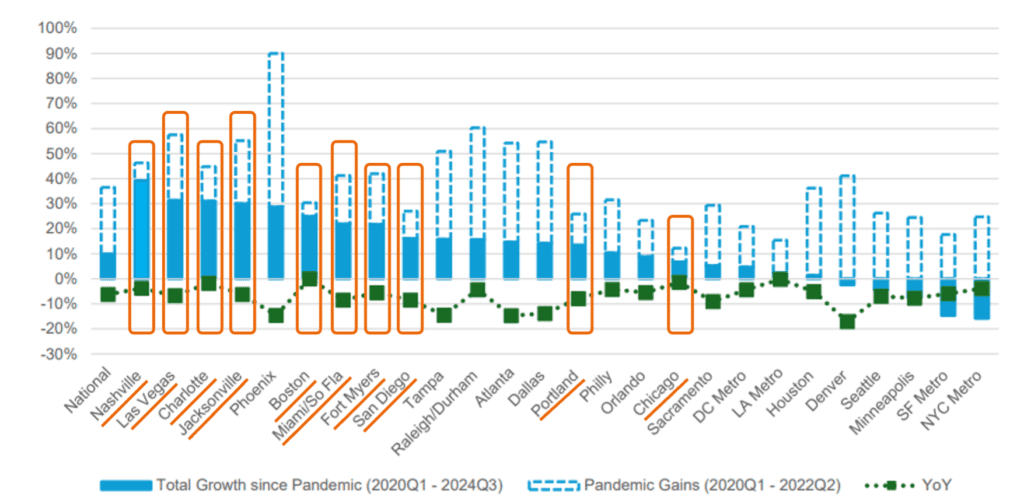
Source: Freddie Mac, Real Capital Analytics CPPI
Multifamily transactions in the first quarter of 2024 were relatively moderate but gained momentum in the second and third quarters due to declining interest rates.
For 2025, the total transaction volume in the multifamily sector is expected to reach between $370 billion and $380 billion.
This projected growth is attributed to several factors, including:
• A backlog of transactions that were postponed while interest rates remained high.
• The need to refinance loans that cannot be extended.
• The stabilization of property prices and capitalization rates.
These factors reflect a gradual recovery in the multifamily market this year.
New Purchases and Multifamily Property Guarantee Volume (in billions of dollars)
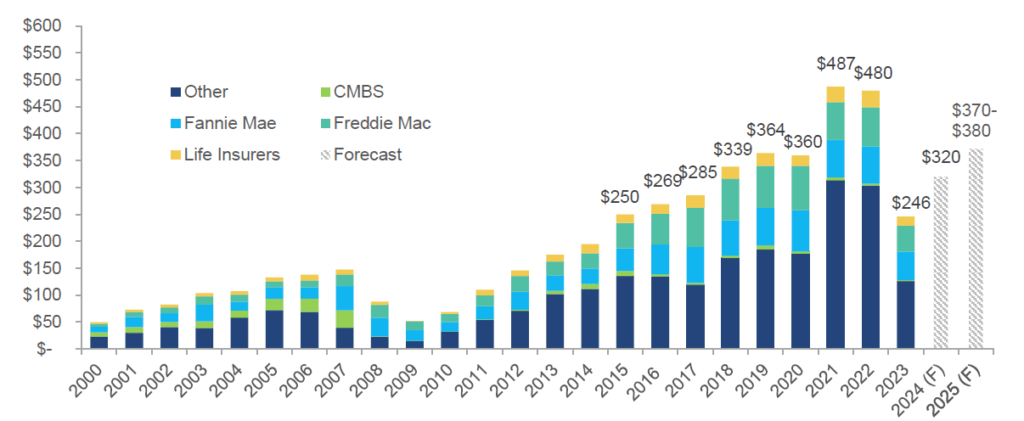
Source: Mortgage Bankers Association, ACLI, Wells Fargo, Intex Solutions Inc., Freddie Mac projections
Note: 2024 and 2025 data by Freddie Mac as of November 2024.
Supporting this outlook is a report published by Bloomberg on January 17: “U.S. Housing Starts Top All Forecasts on Multifamily Construction” by Michael Sasso.
The article states that residential construction in the U.S. accelerated in December to the fastest pace since early 2024, driven by a surge in multifamily projects and a more modest increase in single-family homes. According to government data, new residential constructions increased by nearly 16%, reaching an annualized rate of 1.50 million units, recovering after three months of decline. This figure exceeded all estimates in a Bloomberg survey of economists.
In comparison, single-family home projects, which account for the majority of new housing construction, rose by 3.3%, reaching an annualized rate of 1.05 million units—the highest level since February 2024. Meanwhile, the construction of new multifamily projects, such as apartment buildings, skyrocketed by almost 62%.
The report also highlights that, despite the strong monthly growth, new home construction throughout 2024 was the slowest since 2019. Mortgage rates remained above 6% for the entire year and are now above 7%, exacerbating the affordability crisis initially triggered by record-high home prices.
The economy is following a “soft landing” trajectory—a strategy used by central banks to slow economic growth in a controlled manner to avoid a recession. The Federal Reserve continues to achieve full employment and price stability, although recession risks persist.
Even with this stable economic scenario, the multifamily market in 2025 is expected to see rental income growth, with occupancy rates remaining below historical averages.
However, the strong demand seen in 2024 is expected to continue into 2025, which is crucial given the peak supply anticipated during this period. Elevated supply will remain the main challenge in the short term but is expected to return to pre-pandemic levels by 2026. Therefore, despite short-term obstacles, the multifamily market is well-positioned for continued growth, supported by housing shortages, high costs in the homeownership market, and favorable demographic trends that drive demand for rental housing.
In the United States, we have been investing in multifamily properties since 2017, when we began the development of Terraces @nomad in New York. This project consists of 49 rental apartments, including 15 units designated for low- and moderate-income tenants, particularly teachers, firefighters, police officers, and other essential city workers.
In Miami, we have acquired over 350 workforce housing units from Resia, the American subsidiary of MRV. From this portfolio, we have already divested approximately 150 units, selling them at an opportune market moment and delivering solid returns to investors.
For 2025, we are developing a 300-unit project near Brickell, featuring a rooftop leisure area with a swimming pool, private lounges, a gym, and a linear park with a pet-friendly space.
Postado por TI Maiz em 16/Jan/2025 - Sem Comentários
The Brazilian investment company CIX Capital, owned by the Zogbi family, is preparing a substantial investment targeting the U.S. real estate sector. This move marks a strategic expansion of their portfolio in the international market, emphasizing the growing interest in lucrative opportunities abroad. CIX Capital’s foray into the U.S. market was featured on Neofeed, in a report by journalist Márcio Kroehn. The portal highlighted that the investment firm is allocating $100 million for a new investment cycle in the city of Miami, focusing particularly on the multifamily and healthcare sectors.
In an interview, Carlos Balthazar, CEO of CIX Capital, stated that “Miami has transformed into a city of significant wealth and employment.” The report reveals data from an exclusive study conducted by the firm, which analyzes all the positive factors Miami offers to investors, including a steadily increasing internal migration flow to the city. In the multifamily segment, rental value growth is projected to reach 13.8% over the next four years. Compared to the U.S. average, rental value adjustments in Miami have been 37% over the past three years, exceeding the national average of 23%.
The U.S. residential market moves over $52 trillion annually, considering income-generating and for-sale residential assets. For comparative purposes, the CIX Capital study also analyzed data from major U.S. cities, including New York (NY), Boston (MA), San Francisco (CA), and Washington (DC).
Read full article: NeoFeed
Postado por TI Maiz em 07/Oct/2024 - Sem Comentários
CIX Capital was highlighted in the Pipeline column of Valor Econômico, in a report by journalist Silvia Rosa, showcasing the firm’s growing presence in the U.S. market. The article emphasizes CIX Capital’s expertise in club deals for the development of residential apartments, which are leased in cities like New York, Miami, and other parts of Florida before being sold to institutional investors.
Highlight Projects in the U.S.
One key example is Rooftop @Brickell, a $65 million residential project located in Miami’s financial district. Carlos Balthazar, CEO of CIX Capital, shared details of the firm’s extensive investments in the U.S., including $50 million allocated to medical clinics and rehabilitation hospitals in major metropolitan areas.
“The fund is 100% invested, and we currently hold 11 assets in the portfolio, located in Texas, Florida, Nevada, and Oklahoma,” said Balthazar during the interview.
New Investment Focus: Senior Housing
The report also reveals CIX Capital’s plans to launch a new investment vehicle focused on senior living housing. The firm aims to raise $50 million to $100 million through a bond issuance on Euroclear, a platform that facilitates acquisition for investors via their brokerages.
A Proven Track Record
CIX Capital continues to demonstrate its ability to identify high-value opportunities across diverse real estate segments, including multifamily housing, medical facilities, and emerging markets like senior living.
For more details, visit Valor Econômico.
Postado por TI Maiz em 24/May/2024 - Sem Comentários
A report by journalist Fabiane Stefano on the Brazil Journal portal highlights CIX Capital’s $60 million investment in the development of a residential building in Miami, the Rooftop @Brickell. Targeted at Brazilian investors, the project is a multifamily residential building with 120 units located on Coral Way, just five blocks from the city’s financial district.
To date, 60% of the project funding has been secured, and CIX Capital is launching a roadshow to attract new investors. The initial investment ticket is $250,000, with an expected annual return of 10% to 15%, paid quarterly.
Miami’s Growing Real Estate Appeal
In an interview with Brazil Journal, Carlos Balthazar, CEO of CIX Capital, noted:
“Miami is no longer just a vacation city or a destination for foreigners. It has become an anchor city in the U.S. real estate market, with a low vacancy rate of 5%.”
The property is designed to cater to young executives working at major corporations and financial institutions who seek high-end living accommodations.
CIX Capital’s Real Estate Expertise
With R$ 3 billion under management, CIX Capital has participated in 120 residential and commercial projects in the United States, including shopping centers and medical clinics. For the Rooftop @Brickell, CIX Capital managed all aspects of the development, from conceptualization and design to obtaining project approval from the City of Miami.
This latest venture reflects CIX Capital’s expertise in identifying and executing high-value real estate opportunities, particularly those that resonate with the growing demand for premium urban housing in key markets like Miami.
Read full article at Brazil Journal
Postado por TI Maiz em 20/Mar/2024 - Sem Comentários
What Are the Benefits of Onshore Investments?
Choosing to invest within your home country offers a range of advantages for investors. Simplified account setup, reduced bureaucracy, a better understanding of the local economy, and proximity to investments are just a few reasons why strategically allocating capital to domestic markets can be a smart choice. This combination of exclusive opportunities and simplified regulatory processes can play a critical role in achieving desired financial goals.
Proximity and Local Insight
Investing onshore allows investors to closely monitor the economy and political landscape, enabling them to identify favorable opportunities and act at the right time. By channeling resources into the local economy, investors are less exposed to external volatilities, fostering more stable and confident decision-making for financial growth.
Access to Exclusive Opportunities
Onshore investments provide privileged access to business opportunities and specific sectors that may not be readily available in offshore markets. These exclusive opportunities, combined with a broad range of investment products, can serve as a key differentiator in building a diversified and profitable portfolio.
Simplified Regulatory Environment
Investing onshore comes with fewer regulatory complexities, resulting in faster account setup and easier access to investment options. This simplicity often translates to fewer bureaucratic hurdles and more accessible investment opportunities, even for those with lower capital requirements.
Contributing to Local Economic Growth
By choosing onshore investments, investors not only seek profitability but also contribute to sustainable growth in their local regions. This approach supports safer strategies while laying a solid foundation for long-term financial success.
A Balanced Approach
While this article highlights the benefits of investing in Brazil, it’s worth noting that onshore and offshore investment strategies are not mutually exclusive. Both have their unique advantages, and diversification across markets is always a prudent approach.
Whether you choose to focus on local investments, explore international opportunities, or balance both, aligning your strategy with your financial goals is key to achieving a robust and diversified portfolio.
Postado por TI Maiz em 19/Feb/2024 - Sem Comentários
A strategic partnership between CIX Capital, a key player in the real estate capital markets, and Greystar, a global leader in rental housing, was featured in Estadão on February 2 in its Broadcast+ column. Through this agreement, Greystar will operate five assets of the CIX Share Residencial para Renda FIP fund, encompassing 998 apartments. Launched by CIX Capital in 2018, the fund’s portfolio includes five properties, four in São Paulo (SP) and one in Lajeado (RS), all focused on student housing. Greystar’s Brazilian subsidiary will operate these residences under the Share by Greystar brand.
Optimizing Operations and Enhancing Returns
In an interview with Estadão, Carlos Balthazar, CEO of CIX Capital, emphasized: “Greystar becomes the operator of the business, while the properties remain under the fund’s ownership. The focus for 2024 is to optimize operations, maximize apartment occupancy, and increase rental value.”
This partnership marks a significant milestone for CIX Capital, benefiting the fund, its investors, property staff, and tenants.
The First Structured Student Housing Fund in Brazil
The CIX Share Residencial para Renda FIP is Brazil’s first structured fund dedicated to student housing, with an initial capital raise of R$ 213 million. It has invested in the development and construction of projects tailored for student rentals, offering more than 1,900 beds.
The properties are strategically located in São Paulo neighborhoods such as Butantã, Perdizes, Vila Mariana, and Consolação, near prominent universities like USP, PUC, ESPM, Belas Artes, FAAP, Santa Casa, and Mackenzie.
Expanding Beyond Student Housing
Under the agreement, Greystar will handle the commercialization, administration, and full management of the properties with a dedicated team. Balthazar highlighted the value Greystar brings: “This partnership adds value to operations and enhances the living experience for residents. It underscores our commitment to profitability, commercialization, and unit occupancy, while generating cash flow and reducing leverage for financial results. Additionally, it broadens the target audience beyond students.”
Strengthening the Multifamily Market in Brazil
The multifamily rental market has gained traction in Brazil in recent years. In São Paulo alone, there are approximately 1,600 units, according to a study by Brain. With the current CIX Capital portfolio exclusively focused on student housing, the partnership effectively doubles the professional rental market in the city.
CIX Capital’s Role and Future Strategy
While Greystar will manage day-to-day operations—including lease renewals, marketing, property maintenance, and diversification into non-student tenants—CIX Capital will continue as the fund manager. The company ensures operational continuity during the transition and supports the strategy for disinvestment, planned for 2025.
Full article: Estadão – Greystar Takes Over Share’s Operations and Enters the Student Housing Market
Postado por TI Maiz em 29/Jan/2024 - Sem Comentários
Club deals are an effective way to pool resources from multiple investors to make larger investments, dividing risks and increasing the potential for attractive returns.
The simplest way to understand a club deal is to compare it to a consortium: a collective effort by several participants to acquire a specific asset. Translated from English, “club deal” essentially means “club business.”
Club deals are commonly used by private equity funds. These funds primarily invest in privately held companies—those not listed on stock exchanges—or in large real estate projects.
A private equity investment is made with the expectation that the company or project receiving the capital will appreciate in value, returning the investment either through profits or income distributions to investors, or through resale at a higher price.
While private equity investments can be made individually or through companies and institutions, the most common approach is through funds that pool resources from multiple investors with similar interests.
A club deal is one of the most common strategies used by private equity funds to acquire stakes in privately held companies or large real estate developments that require substantial capital. It enables multiple funds to collectively acquire significant stakes, dividing the costs among participants and making larger investments possible than would be achievable individually.
A club deal involves two or more private equity funds pooling resources to invest in a private business or real estate project, aiming for future appreciation.
Such investments are typically made to secure capital for large-scale projects that individual funds might not afford on their own. In many cases, competing funds choose to cooperate rather than compete, pooling their resources to improve their chances of success through increased available capital.
The primary goal of a club deal is to accumulate greater capital, enabling investments in larger ventures and enhancing competitiveness against bigger companies and investors.
Other objectives include:
● Cost Sharing: Participants share the financial burden of the investment.
● Risk Mitigation: By pooling expertise, investors can collectively assess risks and opportunities.
● Access to Specialized Knowledge: Participants exchange sector-specific insights, enhancing the decision-making process.
● Enhanced Credit Access: Club deals often secure access to better credit lines to support their strategies, an advantage not typically available to individual funds.
Like all investments, club deals carry risks, which must be carefully evaluated.
Key risks include:
● Disagreements Among Participants: Divergent opinions on investment management or expectations can create conflicts and complications.
● Market Risks: Club deals are not immune to market, credit, or regulatory risks.
● Bureaucratic Challenges: Regulatory or legal hurdles can impede progress and add complexity to the process.
To mitigate risks, it’s essential for investors to take the following precautions before participating in a club deal:
● Align Expectations: Clearly define parameters for information sharing, asset management, and exit strategies. Cooperation and harmonious relationships are crucial.
● Sign Formal Agreements: A detailed agreement should outline the responsibilities of each party to ensure alignment and minimize conflicts. Ideally, participating funds should share similar values and investment philosophies.
● Conduct Thorough Audits: Carefully vet the chosen investment through audits and due diligence processes.
● Use Confidentiality Agreements: To protect sensitive information, a confidentiality agreement is often part of the process.
If you’re looking to access premium projects for international investments, contact us today! Let our expertise guide you through successful club deal opportunities and beyond.
Postado por TI Maiz em 29/Jan/2024 - Sem Comentários
Brazil’s investment fund market for student housing is still in its early stages compared to the international market, where there is a more established culture of leaving the family home, attending college, and living in a university-centered environment.
As a result, investing in this segment, commonly known as student housing or student living, is gaining traction—especially in Brazil, where the market remains underexplored.
In this article, we’ll explore this type of investment fund and why many investors are paying attention to student housing.
Investment funds are composed of various types of assets and are offered in the financial market as a collective investment option, managed by a team of specialists.
These funds can focus on specific asset classes, such as equities, real estate, or fixed income. Each share purchased represents partial ownership of the fund, and investors receive proportional returns based on their investment.
Here, we’ll focus exclusively on real estate investment funds!
As previously mentioned, this is a real estate segment that remains relatively untapped in Brazil. Common forms of student housing in the country include informal setups such as student republics, small studio apartments, and boarding houses.
In contrast, in the United States, where the student living culture is more prominent, major real estate operators offer investment and development opportunities for this type of property. The U.S. student living market generated over $10 billion in transactions in 2021, involving 269 properties and 167 separate transactions.
These properties can become stable real estate assets with significant potential returns. Demand for this type of housing is high, and the investment is less vulnerable to financial market fluctuations.
Investment in this segment can be made through funds, companies, or real estate market structures.
Since student housing funds are more prevalent in the U.S., investing in this segment offers greater opportunities for this asset class. This is particularly beneficial for Brazilian investors interested in diversifying their portfolios internationally by incorporating a mix of assets.
In Brazil, CIX Capital’s portfolio includes five operational assets. These properties were custom-built in strategic locations near universities with strong market potential. Collectively, the portfolio boasts over 55,000 square meters of constructed area and more than 2,100 rentable beds.
_.png)
_.png)
_.png)
_.png)
The best way to diversify your real estate portfolio, including investment funds, begins with evaluating the fund manager’s track record and conducting a thorough analysis of the investment opportunity. This includes assessing the expected returns (short and long-term) as well as the risks associated with the project.
It’s essential to rely on experts in the field who can provide strategic guidance, transparency, and realistic assessments of results—whether in Brazil or the U.S.
Contact us to learn more!
Postado por TI Maiz em 19/Sep/2023 - Sem Comentários
An unprecedented study conducted by CIX Capital and published in the September 19 edition of Valor Econômico examines the impacts of Provisional Measure (MP) 1.184/2023 on real estate funds (FIIs). Among the key changes introduced, the MP raises the minimum number of investors required for a fund to qualify for tax exemption on distributed dividends from 50 to 500. Additionally, fund shares must now be actively traded on an organized secondary market, such as a stock exchange or over-the-counter platform.
Key Findings of the CIX Capital Study
According to CIX Capital’s analysis, if the new tax exemption rules had been in place since the inception of FIIs, 40% of the current top 50 funds by market value would have faced significant risks due to having fewer than 500 investors during their initial public offering (IPO). Among these, 20 funds fell short of the 500-investor threshold in their initial offerings.
● Average Initial Investor Base: The average number of investors in opening issuances was just 93, far below the new threshold.
● Growth Requirement: To qualify for the tax exemption, these funds would have needed to expand their investor base by more than fivefold.
Impact on Secondary Market Liquidity
The study also highlights liquidity challenges:
● Among the 50 most actively traded FIIs in the secondary market today, 34% began with fewer than 500 investors.
● Despite these humble beginnings, these funds now average 139,000 investors each and boast a combined net asset value of R$ 2.1 billion, demonstrating significant growth and broad investor participation over time.
Potential Market Consequences
Carlos Balthazar, CEO of CIX Capital, warns that the provisional measure could become a barrier to entry for new players and funds, stifling market expansion.”If this measure had been in place from the start, it is unlikely the market would have reached its current scale of over 2 million retail investors,” Balthazar explained.
The MP’s requirements may discourage the launch of new funds, undermining a sector that has flourished by offering tax-exempt dividend distributions—a key advantage for attracting investors.
Conclusion
CIX Capital’s study underscores the potential risks posed by MP 1.184/2023 to the growth and inclusivity of the FII market. While the new rules aim to promote transparency and market organization, they could inadvertently hinder the entry of innovative funds and players, limiting opportunities for diversification and long-term growth.
For the full article, visit Valor Econômico
Postado por TI Maiz em 27/Aug/2023 - Sem Comentários
We are excited to share the second episode of CIXcast! This time, we had the honor of hosting Marcelo Michalua, founding partner and CEO of RB Capital, as our special guest. Join us as we delve into the intricacies of real estate macroeconomics and investment funds. Hosted by João Pedro Araujo, Portfolio Manager at CIX, this episode offers a wealth of insights into the evolving landscape of the real estate market.
In this episode, Marcelo Michalua—a professional whose career has been closely tied to the evolution of real estate financing in Brazil—takes us through the journey of the market’s growth. Marcelo has witnessed the securitization of real estate credit and the emergence of real estate investment funds. He shares his insights on topics ranging from interest rates to the influence of the Selic rate and broader dynamics affecting the real estate segment.
Marcelo breaks down the complexities of Brazil’s real estate credit market, which historically relied heavily on self-financing. He explores how regulatory frameworks and macroeconomic changes have shaped its evolution, even as it remains in a nascent stage.
Both the real estate investment fund market and the broader capital markets in Brazil are still in their early growth phases. Marcelo emphasizes the importance of macroeconomic stabilization and robust regulation to further strengthen these sectors. This conversation offers a deeper understanding of the nuances driving today’s real estate market and its promising growth potential.
From Marcelo’s perspective, Brazil’s Central Bank acts as both a key partner and a subtle competitor. He highlights how interest rates, particularly their impact on the long-term curve, significantly influence economic activities and real estate assets. The interplay between regulatory stability and macroeconomic health is critical for fostering a robust and healthy market.
Tune into the latest episode of CIXcast for a deep dive into the real estate market and its macroeconomic underpinnings. Subscribe to our YouTube channel and follow us on Spotify to stay updated on powerful insights into real estate investments and more.
Join the conversation and gain a deeper understanding of the market with CIXCAST!
Postado por TI Maiz em 15/Aug/2023 - Sem Comentários
The Valor Econômico print edition on August 14 highlighted how the recovery of stock prices on B3 and the beginning of a Selic rate reduction have started to unlock real estate fund issuances, with offerings nearing R$ 11 billion. According to Anbima statistics, R$ 10.9 billion in operations flooded the market through July, including registered offerings and those with restricted, automatic, or standard procedures. Last year, the segment moved R$ 24.7 billion. Another positive sign was the performance of average stock prices, as measured by the Ifix index, which reached 3,200 points, its highest level since December 2019.
The report notes that lower vacancy rates, rising rents, and asset recycling within portfolios have led to non-recurring capital gains. The weighted average dividend yield of brick-and-mortar funds decreased slightly, from 9.5% per year in 2022 to 8.9% between August 2022 and July 2023, despite a significant market surge. This result is attributed to improved operational performance in the segment.
Insights from João Pedro Araujo of CIX Capital
Among the specialists interviewed by Valor Econômico was João Pedro Araujo, Portfolio Manager at CIX Capital. He highlighted Brazilians’ strong affinity for real estate funds, a class that has seen its number of investors grow even during a period of rising interest rates.
“This recent appreciation brings much-needed dynamism to the sector because, while secondary market prices were falling, investors had no incentive to allocate resources into new vehicles,” Araujo explained.
He further noted, “There is a greater inclination to look at new operations. On the investor side, there was a demand for high returns due to the elevated Selic rate and economic uncertainties, while on the developer side, the math didn’t add up. Companies faced high-interest costs, leading to shelved projects. Now, with better real estate fund and CRI offerings, business is back on the table.”
Araujo also emphasized that “there is more willingness for restricted placements.”
CIX Capital’s Exclusive Funds in the Pipeline
In its structuring phase, CIX Capital is preparing exclusive funds that could reach R$ 200 million by the end of the year.
For the full article, visit Valor Econômico.
Postado por TI Maiz em 19/Jul/2023 - Sem Comentários
We are thrilled to present the debut episode of CIXcast, our brand-new podcast offering valuable insights and expertise in real estate investments and family wealth management. For this inaugural episode, we had the honor of welcoming a very special guest: Carlos Ferrari, founding partner of NFA Advogados, for an in-depth discussion on the intricate realm of Family Wealth Planning.
In this enlightening conversation, Carlos Ferrari shared valuable insights into the complexities of Family Wealth Planning. He provided a clear overview of the legal implications and critical issues surrounding succession planning and asset protection.
We explored a variety of strategies for structuring and preserving family wealth, including the creation of investment funds, life insurance policies, donations with usufruct rights, family protocols, cohabitation agreements, and total separation of property regimes.
One of the standout moments of this episode was the exploration of the iconic ROLEX brand. Carlos Ferrari took us behind the scenes of the Family Wealth Planning strategy employed by ROLEX to ensure the successful preservation and transfer of its assets across generations. This inspiring case illustrates how wealth planning principles can sustain and perpetuate invaluable legacies.
For those unfamiliar with the concept, here’s a quick overview:
Family Wealth Planning is a vital tool for ensuring the continuity and preservation of family assets and values across generations. It provides legal protection for assets, facilitates efficient management, and ensures a smooth transition for heirs. Additionally, it plays a critical role in tax optimization and the organization of business and asset management.
Family and corporate wealth planning requires meticulous attention to detail and careful structuring. These strategies not only centralize the management of assets and businesses but also enable the segregation of specific activities into distinct entities, enhance fiscal efficiency, implement succession and governance rules, and safeguard family legacies.
The first episode of CIXcast is a true masterclass on Family Wealth Planning, presented by two esteemed experts: João Pedro Araujo, Portfolio Manager at CIX Capital, and our special guest Carlos Ferrari.
Don’t miss this opportunity to expand your knowledge and discover the possibilities of Family Wealth Planning.
Subscribe to CIXcast now and follow our podcast on YouTube and Spotify to stay informed with powerful insights on real estate investments and beyond.
Postado por TI Maiz em 18/Jul/2023 - Sem Comentários
The new podcast from CIX brings you top insights from the real estate sector—available to watch or listen to anytime.
We are thrilled to announce the launch of CIXcast, the official podcast of CIX Capital! Bringing you the best content from the world of real estate investments, CIXCAST is your go-to source for insightful discussions and valuable knowledge.
Imagine having direct access to brilliant minds and visionary leaders in the real estate market every week. That’s exactly what CIXcast offers! Available on both YouTube and Spotify, this exciting podcast series features renowned industry guests sharing their insights on a wide range of topics.
From asset reorganization to innovative technology in real estate, CIXcast unpacks the secrets of the industry and delivers exclusive insights you won’t find elsewhere.
Our mission is to provide high-quality information for those eager to deepen their understanding of the real estate market. Episodes cover topics such as macroeconomics and real estate funds, property valuation, alternative investment strategies, and even cutting-edge technology applications in the sector. CIXcast is here to guide you through the complexities of the real estate market with actionable and practical insights to help you make informed decisions.
Who Are the Guests on CIXcast?
Hosted by João Pedro Araujo, Portfolio Manager at CIX, each episode features conversations with leading experts, thought leaders, and influential professionals in the real estate sector. These captivating discussions provide an insider’s view of current trends, successful strategies, and exciting challenges in the world of real estate investments.
Stay ahead in the real estate game by tuning into CIXcast for fresh insights every week. Subscribe to our YouTube channel and follow us on Spotify to get notified about new episodes. Unlock a world of knowledge and explore real estate investments like never before!
At CIX Capital, we’re dedicated to delivering relevant and valuable insights to anyone interested in diving deeper into the world of real estate investments. Don’t miss this opportunity to expand your horizons and elevate your investment strategies with CIXcast!
Postado por TI Maiz em 14/Jul/2023 - Sem Comentários
The partnership between Andbank and CIX Capital was featured on Investing.com in a report published in July 2023. This initiative introduces a groundbreaking opportunity for local investors: a new product that enables international investments using funds allocated in Brazil through a feeder fund based on a closed multimarket investment fund. The first offering raised R$ 25 million.
CIX Capital structured an innovative and tailored solution to facilitate the operation, enabling the fund to receive investments in Brazilian reais, transfer the resources abroad, and invest in U.S.-based products. In an interview with Investing.com, Paulo Carneiro, Head of Real Estate and Alternative Products at Andbank Brazil, praised CIX Capital, stating: “CIX Capital has great ideas and extensive experience in the local and international real estate capital markets. We felt confident throughout the due diligence process, which allowed us to host events at the bank and with CIX.”
Investment in Affordable Housing in California
The Andbank-CIX Capital partnership focuses on the affordable housing segment in California, facilitated by U.S. developer Castellan Real Estate Partners. Affordable housing has become a highly attractive investment opportunity in the U.S., driven by rising rental prices—exceeding 10% annually in some cities. In response, the U.S. government has introduced social programs and fiscal incentives to developers and financial institutions, aiming to create more accessible rental housing in areas with high housing deficits.
Carneiro emphasized: “We chose to sell an experience, not just a product, in a strong currency. Additionally, this investment carries no execution risk.” He explained that the feeder fund functions as a mirror fund, transferring money abroad and allowing investors to track the bond under custody.
Key Advantages of the Feeder Fund
According to Carneiro, one of the standout features of this initiative is its ability to provide clients with a product that yields returns in U.S. dollars plus 10%. He stated:
“This is a way to offer clients an experience with a product that diversifies their investments beyond Brazil. I’m selling an experience, not just a product.”
A Unique Structure Created by CIX Capital
Carneiro also highlighted the exclusive structure developed by CIX Capital:
“This was our first partnership with CIX, which brought significant intellectual capital. The firm has innovative ideas and a long history in real estate capital markets both locally and internationally. We were very comfortable throughout the due diligence process, enabling us to host events at the bank and with CIX.”
For local investors, this partnership opens up an excellent opportunity to expand their portfolios internationally. It provides access to a unique structure created by CIX Capital, offering attractive dollar-denominated returns in a relatively short timeframe.
Addressing the U.S. Housing Deficit
The housing deficit in the U.S. continues to grow, with an estimated need for 4 million new homes in the coming years to meet demand. States like California, Florida, and Texas are most affected, with significant demand for affordable housing supported by government programs.
Investing.com: A Leading Financial Platform
Investing.com is a leading financial markets platform available in 44 languages, offering real-time data, quotes, charts, financial tools, news, and analysis covering 250 global exchanges. With over 21 million monthly users and 180 million sessions, it ranks among the top three financial websites worldwide.
Read the full report here: Investing.com – Feeder Fund by Andbank Enables Real Estate Investment in the U.S.
Disclaimer
This article is not an investment recommendation nor an offer of real estate securities. Always understand the risk factors before making any investments. Opinions expressed are not statements of fact and are subject to change.
Postado por TI Maiz em 14/Jul/2023 - Sem Comentários
Brazilian Real Estate Investment Funds (FIIs) are an excellent choice for investors looking to generate income. They offer various advantages, such as investment diversification, liquidity, and ease of purchase. With a wide range of products available, FIIs cater to different risk profiles and return expectations.
In the U.S. real estate market, the sector demonstrates consistent returns across segments like student housing, multifamily, affordable housing, and senior living, not to mention the commercial real estate sector.
● Diversification: Access a wide variety of real estate assets, reducing the risks of relying on a single property.
● Access to Diverse Markets: Invest in commercial, residential, industrial, and retail properties, capitalizing on opportunities in multiple sectors.
● Lower Initial Capital Requirements: Expand your investment opportunities with a smaller capital outlay.
● Liquidity: Easily trade your shares on stock exchanges, offering more flexibility compared to selling a physical property.
● Regular Income Distribution: Receive regular returns from rental income and capital gains generated by the real estate portfolio.
● Professional Management: Benefit from the expertise of specialized real estate market professionals who optimize your investment’s performance.
Benefit from the expertise of specialized real estate market professionals who optimize your investment’s performance. At CIX Capital, we leverage our expertise to bring the best investment opportunities to our clients.
Stay connected with CIX Capital on social media for valuable insights and updates. Let us guide you toward optimizing your real estate investments with professionalism and innovative strategies.
Postado por TI Maiz em 06/Jul/2023 - Sem Comentários
Since 2012, CIX Capital has been guiding its clients with innovative solutions and strategies, establishing itself as a leading financial company in the real estate investment markets of Brazil and the United States. With a dynamic and disruptive team, the company facilitates and manages real estate investments, aiming to deliver solid long-term returns to investors, family offices, distributors, real estate companies, asset managers, wealth managers, and investment funds.
Operating in 22 cities across Brazil and the U.S., including São Paulo, Manaus, New York, and Miami, CIX Capital has analyzed over 800 opportunities, currently managing a portfolio worth R$ 3.5 billion across 70 completed deals. Its expertise, however, dates back to 1963 with the founding of Zogbi Financeira, which later became Banco Zogbi. By 2023, CIX Capital reached the milestone of R$ 6.9 billion in transactions.
CIX Capital offers a wide range of product lines offshore, including logistics/commercial, healthcare/big data, multifamily (development), multifamily (income), and multifamily (ESG). Onshore, the offerings include market funds, customized funds, real estate paper funds, and multimarket funds. In Brazil, for example, the portfolio includes products such as Real Estate Receivables Certificates (CRI), Credit Rights Funds (FIDC), Real Estate Investment Funds (FII), Multimarket Funds, Club Deals, Private Equity Funds (FIP), and Special Purpose Entities (SPE), among others. In the United States, the product portfolio is also extensive, including Bonds, Preferred Equity, Investment Funds, Promissory Notes, and Offshore Structures.
Expertise and Unique Approach
The CIX Capital team meticulously oversees the investment process, from origination of opportunities to feasibility studies, structuring, distribution, and management. The company’s relentless pursuit of innovation has reshaped how clients invest and engage with the financial and real estate markets both domestically and internationally.
CIX Capital’s pioneering efforts in international investments—particularly in opening up U.S. markets to Brazilian investors—set it apart. Investing in real estate through capital markets is a service offered by few operators in Brazil, and providing this access to Brazilians in the U.S. market is an even more specialized niche. CIX Capital’s proven expertise and track record make it a standout in this field.
CIX Capital’s evolution aligns with the forward-thinking approach of Maiz, part of the Zogbi Family group, which manages the company with credibility and professionalism. This governance is focused on the future, investing in innovation, modernization, and sustainability.
Postado por TI Maiz em 02/Jun/2023 - Sem Comentários
What You Need to Know About the New CVM Rules
Marking a significant transformation in Brazil’s financial landscape, CVM Resolution 175 emerges as a new regulatory framework for investment funds. Designed to align Brazil’s investment fund market with international practices, this regulation plays a central role in the sector’s ongoing evolution. With a focus on global markets and the realities of modern finance, CVM Resolution 175 serves as a beacon of change and progress.
A Global Alignment
One of the most notable changes introduced by Resolution 175 is the inclusion of “classes” and “subclasses”, bringing the Brazilian market closer to international standards. This approach provides crucial clarity for investors, especially foreign investors, by offering a better understanding of the structure and operation of investment funds in Brazil. This standardization not only fosters investor confidence but also lays the groundwork for more robust and informed participation.
Specificities and Focused Approaches
The new annexes reflect a pursuit of greater clarity and comprehensiveness. They cover a diverse range of funds, including:
● Real Estate Investment Funds (FIIs)
● Index Funds (ETFs)
● Private Equity Funds (FIPs)
● Privatization Mutual Funds (FMPs-FGTS)
● National Film Industry Investment Funds (Funcine)
● Incentivized Mutual Stock Funds (FMAI)
● Cultural and Artistic Investment Funds (Ficart)
● Pension Funds
● Credit Rights Investment Funds for Social Interest Projects (FIDC-PIPS)
This expanded scope addresses the needs of a wide array of investors and industries.
Transparency in Fees and Compensation
Transparency is a cornerstone of CVM Resolution 175. The regulation brings greater clarity to the distribution of fees and the compensation of different players in the value chain. This change responds to the need for a clearer understanding of how market participants are remunerated. Enhanced transparency not only builds investor trust but also fosters more equitable and collaborative relationships within the industry
Legal Certainty and Simplification
The introduction of these annexes aims to provide greater legal certainty and clarity for participants in the capital markets. João Pedro Nascimento, president of the CVM, emphasizes that this initiative seeks to establish a solid foundation for market players, enabling a more precise interpretation of rules in a constantly evolving environment.
A Milestone in Modernization and Maturity
As Brazil progresses toward a more modern and aligned regulatory framework, CVM Resolution 175 stands out as a milestone of change and maturity. This regulation not only enhances understanding of the investment fund market but also fosters greater harmony with international practices and global dynamics.
Each step taken toward the implementation of this resolution paves the way for growth, innovation, and renewed investor confidence in Brazil’s investment fund sector.
Postado por TI Maiz em 30/May/2023 - Sem Comentários
Real estate investment funds (FIIs) are becoming increasingly popular in the financial market. They offer an excellent way to diversify portfolios with less impact from economic market fluctuations.
If you’d like to learn more about the main types of real estate funds, keep reading to clear up your doubts about this investment option.
Real estate investment funds (FIIs) work like a “condominium” where investors pool their money into real estate ventures. The invested funds are converted into monthly shares, and FIIs can include various segments, such as shopping malls, hospitals, and brick-and-mortar properties.
To choose the right real estate fund, it’s essential to understand the different types and identify which align best with your investor profile. Consider the diversification opportunities, risks, and potential returns in the current economic environment.
Evaluating a fund’s prospects can be subjective, but with skilled management, it becomes easier to align with your objectives and profile. CIX Capital offers tailored and personalized services to guide you in this process.
Here are four main types of real estate investment funds:
1. Brick Funds
Brick funds focus on investments in physical properties, such as buildings, assets, and real estate developments. The income is typically generated from property sales or rentals, making this a popular option for steady revenue.
2. Paper Funds
This type involves investing in real estate-related debt, and earning profits from interest payments, which are distributed to shareholders. Paper funds are considered less volatile compared to other types of funds and are managed by professional teams who monitor and analyze the investments.
3. Fund of Funds
This category involves investing in other funds within the same sector. The manager diversifies the portfolio by purchasing multiple funds, aiming to enhance returns and maximize profits.
4. Development Funds
Development funds invest in real estate projects that are in the planning or construction phases. These investments often focus on land or developments that will be sold later, offering significant profit potential.
Now that you’re familiar with the main types of real estate funds, how about learning how to purchase them through an investment brokerage?
Trust your wealth to the strategic insight of experienced investors who can provide detailed reports on the performance of the best real estate funds currently available. Rely on financial specialists to help you choose the most suitable fund for your investment goals.
Count on CIX Capital for expert guidance. Contact us today!
Postado por TI Maiz em 12/May/2023 - Sem Comentários
CIX Capital proudly hosted investors, real estate developers, and members of the GRI Club at its New York project, Terraces @nomad, during two of the most renowned international market events: GRI NY Week and the Brazilian Week. These events, held simultaneously, marked the 7th edition of GRI NY Week and brought together prominent figures in the real estate industry, including investors, developers, property owners, operators, executives, and entrepreneurs from both national and international markets. Participants engaged in a series of activities, including a visit to Terraces @ Nomad, fostering discussions about opportunities within the sector.
Situated at 7-9E 30th Street, between 5th Avenue and Madison Avenue in Manhattan’s NoMad neighborhood, Terraces @nomad is a real estate development project spearheaded by CIX Capital in partnership with U.S.-based Castellan Real Estate Partners.
The project followed a club deal investment model, structured through a Special Purpose Entity (SPE). A private issuance took place between 2018 and 2019, raising $63 million from 20 Brazilian investors.
● Construction Timeline: Began in 2019, completed in 2022.
● Structure: A 24-story building featuring 49 rental apartments and a retail space.
● Certification: The building has received its Certificate of Occupancy (equivalent to the “habite-se” in Brazil).
The Terraces @nomad project represents a milestone for CIX Capital, showcasing the success of its strategic partnerships and its ability to deliver high-quality developments in prime international markets.
Postado por TI Maiz em 05/May/2023 - Sem Comentários
Committed to offering investors new opportunities in the international market with excellent returns, CIX Capital—a company specializing in the management and structuring of real estate-focused investment funds in Brazil and abroad—is increasingly expanding the development of affordable housing projects in California. These projects align with ESG standards, underscoring their commitment to sustainable and socially responsible investments.
A recent example of this effort is the structuring of the CIX ESG Affordable Housing Bond in partnership with Castellan Real Estate Partners, a New York-based real estate development and investment firm. Through this instrument, CIX Capital issued $20 million in international debt to finance the development and construction of affordable housing in California, serving as both the structurer and manager of the initiative.
One of CIX Capital’s key differentiators is its rigorous approach to selecting partners. Castellan is a prime example of this strategic vision. A vertically integrated real estate investment company, Castellan operates through in-house platforms covering bridge loans, equity investments, property management, construction, and development.
Since 2009, Castellan has been involved in real estate debt and equity transactions exceeding $1 billion in market value. Recently, Castellan’s Managing Partner, Paul Salib, received recognition from Citibank Community Capital and Todd Gloria, the mayor of San Diego, for his contributions to significant development projects in San Diego and across California. The CIX Capital team proudly witnessed this well-deserved accolade.
Rigorous Partner Selection Process
For CIX Capital, selecting partners for international real estate ventures is a critical process conducted with extreme rigor. Due diligence, professionalism, expertise, track record, and governance standards are carefully evaluated to foster solid partnerships and deliver optimal outcomes for investors. By maintaining full control over management, CIX ensures excellent returns for its investors.
The company’s investment strategy is rooted in comprehensive market analyses. By investing in affordable housing, CIX Capital not only addresses a critical societal need but also offers an attractive investment product with above-average returns.
Postado por TI Maiz em 25/Apr/2023 - Sem Comentários
Understanding how to invest abroad is an excellent way to diversify your investment portfolio, achieve higher returns, and protect your wealth in a financial scenario with a stronger currency than your national one. Additionally, it provides an opportunity to maintain purchasing power in a stable currency.
You don’t need to live in another country to invest abroad; all transactions can be conducted while residing in Brazil. Best of all, diversifying your portfolio offers significant profitability with returns in U.S. dollars, including interest or dividend income. Keep reading to learn more about how to invest abroad while living in Brazil.
There is no fixed minimum amount required to invest abroad—it depends on the range of products offered by your chosen brokerage or investment company. To ensure a successful investment, it’s important to work with a financial advisor who can guide diversifying your portfolio, maximizing returns, and determining the best opportunities to invest internationally.
The international investment market offers numerous possibilities, combining security, stability, and growth potential provided by solid institutions. To begin trading stocks abroad, it’s essential to understand the main types of investments available.
There are many ways to diversify your portfolio and enhance returns by investing internationally. Options include:
● Direct property purchases.
● Establishing or utilizing a company to acquire real estate.
● Purchasing shares in real estate investment funds or securities listed on stock exchanges backed by real estate assets.
REIT (Real Estate Investment Trusts)
In foreign markets, you can invest in shares of funds that hold stakes in real estate companies or through REITs (Real Estate Investment Trusts). In these investments, investors may be exempt from income tax and receive up to 100% of the net income generated.
Investing in foreign currencies is an excellent option for those seeking financial returns with all the benefits international markets can offer. Key advantages include:
1. Diversification
Investing abroad grants access to a wide range of assets, enabling you to diversify your portfolio. This reduces the risks associated with concentrating assets in a single market segment or being limited by national restrictions.
2. Profitability
International investments often offer assets with higher profitability and stable cash flows, promoting frequent dividend distribution.
3. Security
Investing abroad reduces risk exposure since returns are paid in U.S. dollars—a currency with greater purchasing power and stability compared to the Brazilian real. Dollar-denominated investments can balance your portfolio and provide a more favorable risk-return ratio.
Now that you understand the advantages of investing in foreign assets, work with a team of financial specialists to guide you in investing abroad while living in Brazil. They can help diversify your portfolio and achieve strong returns in foreign currencies.
Count on CIX Capital. Contact us today!
Postado por TI Maiz em 31/Mar/2023 - Sem Comentários
An article by the NeoFeed portal highlighted CIX Capital’s initiative in the affordable housing sector in California, USA, through the issuance of a $20 million ESG Affordable Housing Bond. This bond aims to finance development and construction projects in partnership with Castellan Real Estate Partners, a New York-based developer and investment firm. Issued in Ireland, the bond is easily accessible to Brazilian investors, with a minimum investment requirement of $200,000. The projected return for investors exceeds 11% annually, delivering a dollar-denominated return higher than the average for this segment.
The article explains that the CIX Capital bond functions as a bridge loan. “Since the government approves the project but does not grant the tax exemption in advance, the developer needs to finance the construction—this is the bridge that CIX provides. Only after the licenses for housing occupancy are received is the benefit released, allowing the credit to be sold to major banks.” In an interview with NeoFeed, Carlos Balthazar, CEO of CIX Capital, stated, “There is demand for quality private equity real estate investments to meet the need for strong currency returns.”
The report also mentions CIX Capital’s activities in the multifamily segment, highlighting a recently licensed 24-story building in New York.
Read the full report at: https://neofeed.com.br/negocios/cix-capital-da-familia-zogbi-vai-financiar-casas-populares-na-california/
Housing Deficit Rising in the U.S.
According to Balthazar, the housing deficit in the United States is steadily increasing, with an estimated 4.3 million units needed over the next 12 years to meet demand. California, Florida, and Texas are the states most affected, accounting for 40% of the demand for social housing, which benefits from various government programs.
With rental prices increasing by over 10% annually in some cities, the U.S. government is intensifying efforts to facilitate housing access. This includes redefining rules for how cities and states can use funds to create more affordable rental housing for individuals earning 65% or less of the area’s median income.
These government initiatives, combined with rising rental prices, make affordable housing an attractive investment. Additionally, over the past decade, real estate asset prices have risen approximately 110%, far outpacing inflation, which was just over 20% during the same period (St. Louis Fed, December 2021).
CIX Capital’s initiative is aligned with ESG principles. All developments will be certified under LEED (Leadership in Energy and Environmental Design) or Title 24 Building Energy Efficiency Standards, both of which are benchmarks for sustainable construction.
This strategic move underscores the growing significance of ESG-focused investments while addressing a critical need for affordable housing in the United States.
Access full article at NeoFeed
Postado por TI Maiz em 17/Mar/2023 - Sem Comentários
CIX Capital has been investing in the multifamily residential segment since 2018.
Want to know why? Keep reading to learn more!
First, it’s important to understand the specifics of this type of investment. Multifamily properties are buildings designed to accommodate more than one family, such as apartment complexes, lofts, gated communities, and housing developments.
The primary feature of multifamily properties is their commercial purpose. Unlike traditional residential condominiums in Brazil, these buildings are typically constructed to generate rental income. They are owned by a single entity or investor and leased to various tenants.
This income-generating residential construction model is well-established internationally, making it an excellent option for those seeking alternative investments. The U.S. market is particularly robust, with numerous financial institutions exclusively dedicated to this sector. In Brazil, companies such as Greystar, JFL Realty, Yuca, and Charlie are prominent players in this space.
The multifamily property market caters to a diverse audience based on regional demand. These properties are categorized into three main types of construction:
HIGH-RISE
Found primarily in large urban centers, high-rise properties range from buildings with five stories to towering skyscrapers.
MID-RISE
In smaller cities, mid-rise buildings are more popular and cater to the preferences of local tenants. These properties typically range from five to ten stories.
GARDEN STYLE ou SUBURBAN
In suburban areas across the U.S., residential clusters cater to a broad demographic, from lower to upper-class tenants. Multifamily properties in these locations are generally low-rise buildings with three to four stories.
Investing in income-generating multifamily properties requires careful evaluation, whether you’re a beginner or an experienced investor. Collaborating with an investment advisor, financial planner, or securities consultant is crucial. Here are key indicators to consider:
The first step is understanding whether the expected ROI aligns with your short- or long-term goals. The profitability of an investment reflects variations in distributions and serves as a starting point for selecting the best option. Higher returns often come with higher risks, so it’s essential to assess the risk-return profile of the opportunity before making a decision.
The location of the property is a critical factor in evaluating real estate investments. Thanks to market globalization and digitalization, you can now invest in properties anywhere in the world, not just in your city. Conduct thorough research on the real estate market to understand regional nuances. Alternatively, simplify your process by exploring the portfolios of established companies specializing in this type of investment.
Partnering with experts not only streamlines the investment process but also enhances its security. These companies continuously conduct market research to identify the best locations and work with trusted partners for each project.
Multifamily properties offer a robust, reliable investment option with significant potential for steady returns. By carefully evaluating the ROI, understanding market trends, and partnering with experienced professionals, you can unlock the full potential of this growing segment.
Postado por TI Maiz em 14/Dec/2022 - Sem Comentários
There are several ways to invest in real estate in the U.S., offering high-profit potential and returns in U.S. dollars. This type of investment can be made through direct share purchases in the U.S., BDRs, or Real Estate Investment Funds (REITs).
If you’re looking to diversify your investment portfolio with international options, here are some tips on how to invest in the U.S. Keep reading!
One of the key advantages of investing in the U.S. is the opportunity to earn dividends in a stronger currency, helping to grow your investments and diversify your portfolio over the long term.
The first step is understanding how and when to invest. Consulting an investment management company that provides resource management and advisory services can make a significant difference in making informed investment decisions.
The U.S. market offers excellent options for assets that provide monthly dividends for those looking to diversify their portfolios. Below are the most common ways to invest in U.S. real estate.
1. REITs (Real Estate Investment Trusts)
REITs are a popular investment option in the U.S. that allows you to diversify your portfolio alongside other investments. Investing in REITs is similar to buying a stock in a foreign market. You’ll need a brokerage firm to purchase shares in a real estate company.
Consulting with an experienced investment advisory firm can help ensure secure decision-making with greater potential for returns.
2. BDRs (Brazilian Depositary Receipts)
BDRs represent shares of international companies traded on the Brazilian stock exchange. This investment option typically includes large corporations like Amazon, Microsoft, and Apple. However, it is generally a more limited investment type, as it requires a minimum asset threshold to participate.
To invest securely, diversify your portfolio, and achieve strong returns in a more stable currency, seek advice from a specialized financial team. CIX Capital provides consultancy services to help you make informed investment decisions.
Contact us today!
Postado por TI Maiz em 29/Nov/2022 - Sem Comentários
Choosing a Real Estate Investment Fund (Brazilian equivalent of REIT) investment with active or passive management depends on the expected performance and potential returns desired by each investor. It’s essential to understand how each approach works to determine whether you prefer a fund aiming to outperform the benchmark (active management) or one designed to replicate the benchmark’s performance (passive management).
The key distinction of actively managed REITs lies in the fact that a specialist fund manager makes decisions and investment strategies. In this case, the portfolio undergoes regular reviews and assessments to identify opportunities for optimization, aiming for higher financial returns while adhering to the fund’s investment strategy.
In contrast, passively managed funds typically replicate a benchmark index, such as the CDI or Ibovespa. These funds are structured to track predetermined indices, focusing on stability rather than outperformance.
Active management tends to draw more attention due to its potential for higher returns. However, it requires greater investment knowledge to manage risks effectively. For beginners, it’s recommended to start cautiously with passive income strategies to avoid surprises and potential losses. Alternatively, seeking professional help for asset management is a wise approach.
Investment funds are a simple and accessible option for investors looking to enter the financial and capital markets with the guidance of a professional manager. These funds can focus on specific strategies or combine investments across various markets, diversifying in areas such as interest rates, currencies, equities, real estate assets, derivatives, and international assets. This approach aims to achieve returns that exceed benchmark indices, as seen with passive management.
ETFs, or Exchange Traded Funds, are an example of passive management in the stock market. For instance, Ibovespa ETFs consist of shares from various companies in the index and are traded like common stocks on the stock exchange.
When selecting investment funds to include in your portfolio, it’s essential not only to focus on return predictability but also to adopt a strategic perspective on the fund manager’s decisions. Always ensure the information presented in reports is clear and transparent, and the fund’s performance results are well-documented.
Rely on experts in the financial and real estate sectors to guide you in making sound real estate-backed investments. Count on CIX Capital. Contact us today!
Postado por TI Maiz em 28/Nov/2022 - Sem Comentários
Investment diversification has always been a cornerstone of any successful strategy. Investing in different asset classes aligns with the famous saying, “Don’t put all your eggs in one basket.” In this context, international real estate investments can be a great addition to your portfolio.
The recent COVID-19 pandemic demonstrated how differently assets behaved in various parts of the world, further underscoring the importance of diversifying assets and locations. Investors who had already diversified before the outbreak benefited from the competitive advantage of having investments spread across multiple countries. This outcome is less likely when investments are concentrated in a single foreign nation. However, this strategy requires careful analysis of asset allocation.
But what factors should you consider to make the best decisions? In this article, you’ll discover various types of real estate investments abroad. We assume that the investor already has an account or a company set up with available funds overseas. By the end of this article, you’ll have all the insights you need. Let’s dive in!
There are several options for investing in foreign properties, including:
● Direct property purchases.
● Participation in a company that owns real estate.
● Purchase of shares in a fund that holds stakes in companies with real estate assets.
● Investments through REITs (Real Estate Investment Trusts), which are similar to Brazilian real estate funds (FIIs).
In the case of REITs, investors receive 85% to 100% of the income generated, which may even be exempt from income tax depending on the country or legal structure used to organize the investment.
Beyond the type of operation, it’s crucial to define your investment goals. You can invest to generate recurring income (through rents from residential, commercial, or industrial properties) combined with property appreciation over time. Alternatively, you can invest in a development project aimed at selling the property after construction to capture capital gains.
The United States and Portugal are top destinations for Brazilian investors.
In the U.S., key markets include New York, California (notably San Francisco and Los Angeles), and Florida. Florida, in particular, stands out due to its unique appeal.
Florida boasts a population of over 21 million, a GDP of nearly $1 trillion (as of 2019), and limited space for new construction, creating lucrative investment opportunities. Cities like Miami, Orlando, Tampa, St. Petersburg, and Jacksonville are prime locations. To illustrate, Orlando attracts 60 million tourists annually—ten times the number of tourists Brazil received during the 2014 World Cup.
In Europe, Portugal presents unique opportunities with special conditions for investors. Due to historical ties between Brazil and Portugal, specific investment schemes are already in place. One example is the “Golden Visa,” which grants free movement across Europe to individuals who invest in properties over 30 years old valued at €350,000 or more. Policies like these made Portugal account for 17% of all Brazilian foreign investments in May 2019, according to a report by Estadão.
This is perhaps the most critical point of the discussion. Since the U.S. real estate market rebounded after the 2008 crash, poorly structured investment models have emerged, leading to penalties and fines from the IRS (U.S. Internal Revenue Service). Therefore, it’s essential to partner with reputable investment firms and collaborate with partners or associates who possess local expertise and recognition.
The choice of country is another crucial factor. Mature economies are always the best options. Unstable countries do not offer reliable guarantees of investment returns, while stable economies can generate consistent profits over the years.
Lastly, it’s vital to understand how to declare taxes on these assets in the respective countries. Tax regulations are stringent, and any non-compliance can result in hefty penalties. It’s worth ensuring everything is done correctly to avoid overlooking critical details.
Diversifying investments mitigates risks and helps create a balanced portfolio. It’s not advisable to concentrate all your assets in a single investment type, even if diversified. International real estate is an excellent choice for diversification. Just ensure you select a skilled investment advisor and opt for a mature real estate market. By doing so, you increase your chances of success!
Postado por TI Maiz em 15/Sep/2022 - Sem Comentários
With the rise of the IPCA and CDI rates, knowing how to choose a real estate fund to invest in is the first step to ensuring higher financial returns. Currently, real estate receivables funds are providing very positive returns for investors.
However, despite high dividends, caution is recommended when investing in this asset class. Analyzing the fund’s portfolio and evaluating its managers can help investors make informed decisions.
In this post, we’ll discuss how to analyze real estate receivables funds specifically, along with their advantages, and risks, and how to choose the best fund for your portfolio.
The primary characteristic of a real estate fund is that it functions as a sort of condominium for investors. In other words, a percentage of resources is pooled together to be invested in the real estate market all at once.
With the growth of the financial market, more individual investors are entering the stock exchange to invest in real estate funds. Since this market is growing and evolving with trends, having financial advisors to manage your assets and determine where and how much to invest for optimal returns is invaluable.
A receivables fund is a type of real estate fund primarily aimed at investing in securities backed by real estate assets. These investments can include Real Estate Credit Letters (LCI), Real Estate Receivables Certificates (CRI), Mortgage-Backed Securities (LH), REITs, Additional Construction Potential Certificates (CEPAC), and Credit Rights Investment Fund Shares (FIDIC).
Put simply, a receivables real estate fund invests in debt and earns interest, which is then distributed to investors after deducting costs.
One key advantage of receivables funds is that, despite having most of their portfolio in receivables, they can also include stakes in other funds, depending on the desired risk level.
The main benefits of investing in this type of fund are access to securities that are not always available to individual investors, lower volatility compared to other types of funds, and professional management overseeing and analyzing investments.
As with all real estate funds, receivables funds offer a practical way to build a diversified portfolio managed by professional fund managers.
The main downside of this type of fund is that it generally cannot grow its net asset value because it distributes inflation adjustments, unlike equity funds (brick funds) where property values can appreciate, increasing the fund’s value.
Although the final investments are in fixed-income assets, investing in receivables real estate funds is considered a variable-income investment and carries risks such as:
1. Volatility: Changes in the share price.
2. Profitability: Variations in income distribution.
3. Liquidity: Trading volume on the stock exchange.
It’s worth noting that CRIs and investments in real estate funds are not guaranteed by the Credit Guarantee Fund (FGC). When evaluating a receivables fund, consider the following:
1. Risks in the fund’s portfolio.
2. Dividend Yield.
3. Fund management quality.
The risks of receivables funds can be assessed by analyzing the debtors. It’s essential to understand whether the company has high credit risk or is performing well. For example, if the company is close to filing for bankruptcy, it would be a poor choice to invest in its receivables fund.
Other points to consider when evaluating risks include:
1. Loan-to-Value (LTV): The lower the percentage, the lower the risk.
2. Rating: Classified as A, B, and C, where A is the least risky and C is the riskiest.
3. Guarantees: Such as fiduciary assignments of shares.
Receivables funds can be classified into two categories: high yield or high grade. High-yield funds aim to distribute higher dividends but take on more risk, while high-grade funds focus on lower-risk investments with correspondingly lower returns.
The Dividend Yield (DY) depends on the fund’s investment portfolio and the indexing of its investments, which are usually tied to IPCA+. As a result, income is generally directly related to inflation.
Unlike equity funds, where contracts are also often indexed to inflation, these adjustments may be harder to pass on to tenants and usually occur only once a year.
The Dividend Yield is calculated by dividing the distributed dividend by the share price. A higher DY is better, but a high DY often comes with higher risk. Thus, analyzing the assets and the fund manager is critical to ensuring the investment is sound.
Beginner investors may fall into the “yield trap,” where a fund shows a high DY due to a drop in share price caused by a risk factor within the fund.
Evaluating a fund’s management can be subjective, but it’s possible to assess it simply by looking at the results delivered, whether it meets its stated goals, and whether its objectives align with yours.
Always review the management’s track record, its decision-making over time, and the clarity and transparency of the information provided in its reports and monthly updates.
Rely on financial specialists to guide you in choosing the right real estate fund to invest in. Count on CIX Capital. Contact us today!
Postado por TI Maiz em 10/Sep/2022 - Sem Comentários
Nowadays, investing in physical real estate is straightforward and accessible for all budgets. As an investor, you can choose a brick fund to integrate into your portfolio. Brick funds are real estate funds comprised of physical properties, sought after by investors who wish to include them in their portfolio without directly purchasing the properties.
This type of fund eliminates much of the bureaucracy associated with real estate acquisition and offers an investment opportunity comparable to the traditional method. However, while brick funds are easily accessible, selecting the right one requires careful consideration. It’s essential to understand what aspects to evaluate when choosing the most suitable fund for each investor.
In this post, we’ll explore how brick funds work and what to analyze when deciding which one to invest in. Read on!
A brick fund allows you to invest in physical real estate. While it is composed of real estate assets and tends to be less volatile, this fund is traded as a variable-income investment. For this reason, it’s an appealing financial product for investors with some experience in the segment who are looking for regular income.
This type of fund enables investment in a portfolio of physical properties through the purchase of shares. Strategies are developed to achieve target returns, as outlined in the fund’s regulations, based on its objectives and risk profile.
Funds use the resources collected from initial share purchases to build or acquire real estate assets in specific sectors, such as logistics warehouses, or allocate the resources to other segments within the real estate market. The primary goal is to achieve planned returns through monthly rental income or by selling properties after they appreciate in value.
In a real estate fund, the investor is not the direct owner of the properties acquired. Instead, the investor “lends” capital to the fund to implement its strategies, freeing them from the responsibilities of managing, controlling, or collecting rent.
Brick funds involve both a manager and an administrator who are responsible for creating strategies, custody of the shares, and all related actions for the fund.
There are several types of brick funds, including:
● Hospitals;
● Shopping centers;
● Corporate offices;
● Logistics warehouses;
● Supermarkets;
● Educational institutions;
● Bank branches.
Each sector has unique characteristics that will directly impact the return on your investments, so it’s essential to analyze the specifics of each type of property.
Compared to stock investments, brick funds tend to exhibit lower volatility. This characteristic makes them more appealing to beginner or conservative investors.
Brick fund profitability comes from rental income generated by the properties in the portfolio, which is periodically distributed among investors. If a property is sold, the appreciation value is also distributed.
Diversified funds, such as brick funds, often have higher liquidity on the stock exchange. You can opt for funds listed in the IFIX (Real Estate Investment Fund Index), which includes the most traded funds. However, funds outside this index usually have lower liquidity, making it riskier to enter or exit these investments.
It’s crucial to check the average vacancy rate of the fund, particularly for income-focused funds. This rate reflects the average time properties remain unoccupied, which impacts returns. A high vacancy rate in a brick fund could signal increased risks, but it may also present a buying opportunity if the shares are discounted relative to the market value of the properties.
When investing in real estate, choose funds that align with your comfort level after conducting a detailed analysis of their characteristics, investment thesis, and risks. Assess your tolerance for risk, market fluctuations, and potential losses.
Types of investors include:
● Aggressive: High risk tolerance.
● Moderate: Tolerates some level of risk.
● Conservative: Low risk tolerance.
Since real estate investments fall under variable income, they are less suited for conservative investors. However, they can still be a valuable option for diversifying a conservative portfolio.
Before purchasing shares, it’s essential to analyze the fund’s performance history. While past performance doesn’t guarantee future returns, it provides insight into the fund’s behavior and serves as a strong indicator of its potential. This analysis helps align expectations and guide decision-making. Additionally, when evaluating performance, always compare it to a benchmark.
Postado por TI Maiz em 24/Mar/2022 - Sem Comentários
Real Estate Development Funds are considered a subcategory of Real Estate Investment Funds – the equivalent of REITs (Real Estate Investment Trusts) – that focus exclusively on constructing real estate assets across various segments. These properties can then be marketed for either sale or lease. This is one way to invest in the early stages of real estate development, allowing participation in the financial returns of residential development, for example, without needing to purchase the physical property or invest large amounts. Additionally, investors benefit from the expertise of a developer and management company to oversee the project. Read on to learn more about this type of investment.
This type of investment functions like a residential condominium designed for investors. In essence, a group of individuals pool their resources to be applied toward a specific construction or project in the real estate market, whether residential, commercial, industrial, or office-related.
This type of investment functions like a residential condominium designed for investors. In essence, a group of individuals pool their resources to be applied toward a specific construction or project in the real estate market, whether residential, commercial, industrial, or office-related.
Once the property is complete, it can be listed for sale or lease. Regardless of the type of transaction, the proceeds generated by the project are distributed among the investors. This could be through the property’s sale value (or properties) or the monthly rental income. The earnings are then distributed among the fund’s investors according to the amount invested by each individual.
Unlike investing in stocks on the stock exchange, Real Estate Development Funds require the involvement of a fund manager with expertise in the real estate market and REIT management. The manager is responsible for overseeing the financial resources invested, guiding the selection of land, property, or construction projects, and developing a strategy for the project’s development, sale, or lease. This process takes into account the potential returns, risks, and liquidity of the assets, as outlined in the fund’s regulations.
To begin, it’s essential to have detailed records, including the income statement and transaction history for each month of the previous year. These reports are typically provided by the fund administrator.
Under the “Tax-Exempt and Non-Taxable Income” section, report the income earned from real estate funds. At this stage, include the fund administrator’s details.
If you traded REIT shares during the year, fill out the “Variable Income” section under “Real Estate Investment Fund Transactions.” Here, you must report net profit or loss from sales.
It’s important to note that only the fund’s distributions are tax-exempt. If you sell your fund shares and generate capital gains, you must report these gains in another section and pay the applicable income tax, if required.
Access the “Assets and Rights” section and navigate to Group: 07 – Funds and Code: 03 – Real Estate Investment Funds (REITs). In this section, include the fund’s name, CNPJ (Corporate Tax ID), share value, and brokerage name. All this information is available in the income report provided by the fund manager.
CIX Capital is an investment by Maiz: maiz.com.br

